

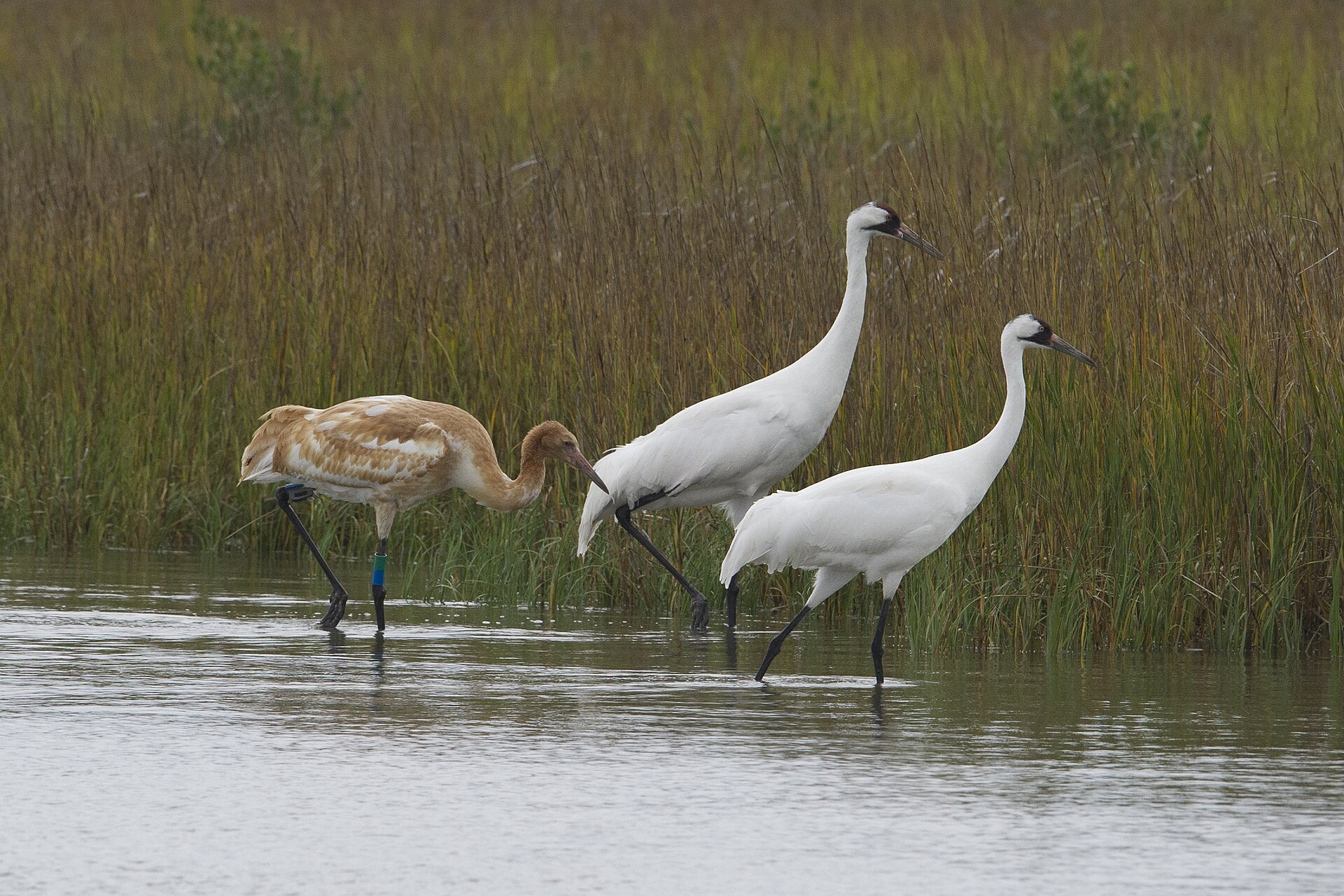
Every fall, while most of us are pulling sweaters out of the closet, a few hundred very determined birds are making one of the most remarkable journeys in North America.
They leave Wood Buffalo National Park in northern Canada and fly roughly 2,500 miles south, across prairies, farmland, and half of Texas, until they reach the salt marshes of the Texas Gulf Coast. There, around Aransas National Wildlife Refuge near Rockport, they settle in for the winter.
They are whooping cranes, the tallest birds in North America, and seeing one in person is the kind of moment that turns casual travelers into lifelong bird watchers. Even if you have never owned a pair of binoculars, this is a winter trip worth taking.
A Comeback Story Worth Celebrating
Whooping cranes are a true conservation success story, though their journey is far from over. When the species was listed as endangered in 1967, only around 50 of these birds were left in this wild population. For a while, it looked like they might disappear completely.
Decades of protection and habitat work changed that. In its most recent count, the U.S. Fish and Wildlife Service estimated that about 540 whooping cranes, including at least 57 juveniles, spent the winter of 2025 to 2026 on the Texas coast. It is still a small number, which is exactly why every sighting feels special.
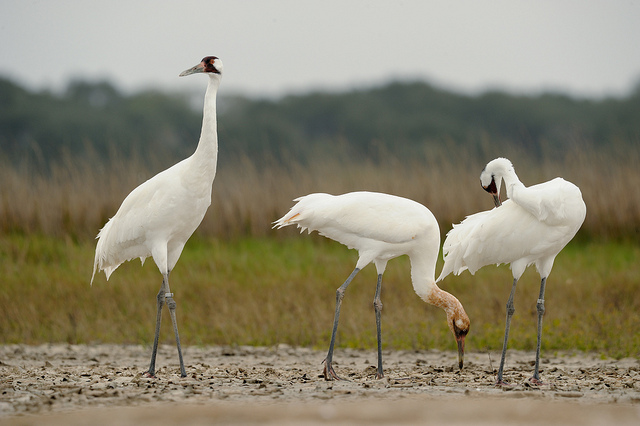
A whooping crane family on its wintering grounds at Aransas National Wildlife Refuge. Photo: U.S. Fish and Wildlife Service via Wikimedia Commons, Public domain
When to See Whooping Cranes in Texas
The cranes typically arrive on the Texas coast in the fall and stay through early spring. Mid-November through March is generally the best window for spotting them, with the birds settled into their winter territories in the marshes around Aransas Bay and San Antonio Bay.
They are easy to recognize once you know what to look for. Adults stand about five feet tall, with snowy white feathers, a red patch on the head, and black wingtips that show up beautifully in flight. Young cranes have a rusty, cinnamon tint to their feathers. In winter, the cranes feast on blue crabs and the bright red berries of the Carolina wolfberry, so you will often see them wading slowly through shallow water, hunting.
Where to See Them
Aransas National Wildlife Refuge
Established in 1937, Aransas National Wildlife Refuge protects more than 115,000 acres of marsh, prairie, and oak woodland along the coast. It is the heart of whooping crane country. The refuge has a 40-foot observation tower overlooking the wetlands, which is one of the best places to scan the marshes for cranes. The refuge is about 35 miles north of Rockport, so plan for a half-day trip.
Good to know: Cranes are often seen at a distance, so bring binoculars or a camera with a good zoom. Bug spray is a smart idea, too.
Boat Tours From Rockport and Fulton
For the closest views, many visitors book a guided whooping crane boat tour. During the winter season, several local operators run trips from the Rockport and Fulton harbors into the bays near the refuge, where captains know where the crane families tend to feed. Tour schedules and operators can change from year to year, so check the latest options with the Rockport-Fulton visitor center and book ahead, especially on weekends.
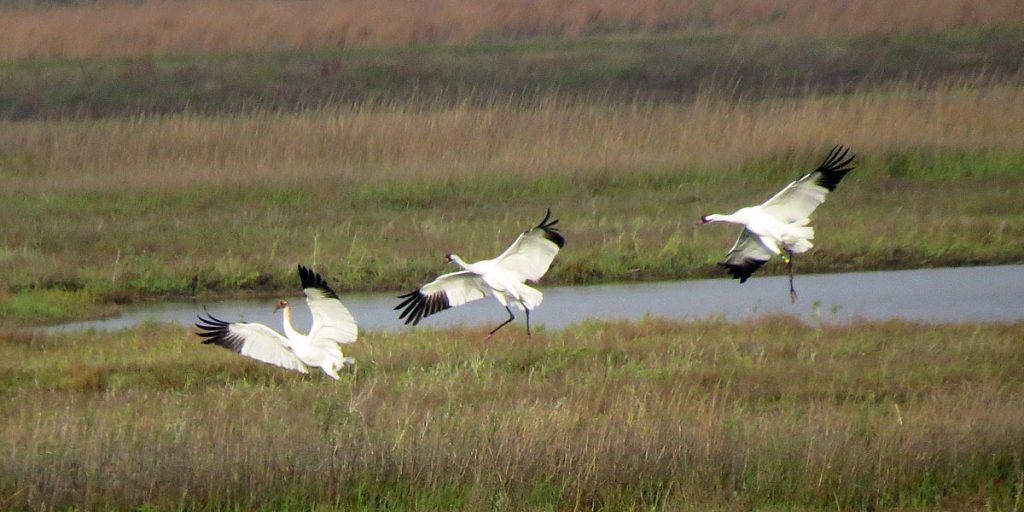
Whooping cranes take flight over the marsh at Aransas National Wildlife Refuge. Photo: Don Faulkner via Wikimedia Commons, CC BY-SA 2.0
Goose Island State Park
Just north of Rockport, Goose Island State Park sits on St. Charles Bay, right across the water from the refuge where the cranes spend the winter. The park is also home to the Big Tree, a massive coastal live oak that has been standing for centuries and was named the State Champion Coastal Live Oak in 1969. Stop to see it, then walk out onto the park’s 1,620-foot fishing pier for wide views of the bay.
More Birds, More Reasons to Visit
Whooping cranes may be the headliners, but the Rockport area is a birding hotspot all winter long. Keep an eye out for roseate spoonbills with their bubblegum-pink feathers, great blue herons, snowy egrets, brown pelicans, and a long list of ducks and shorebirds. Even a casual walk along the waterfront can turn into an impromptu birding session.
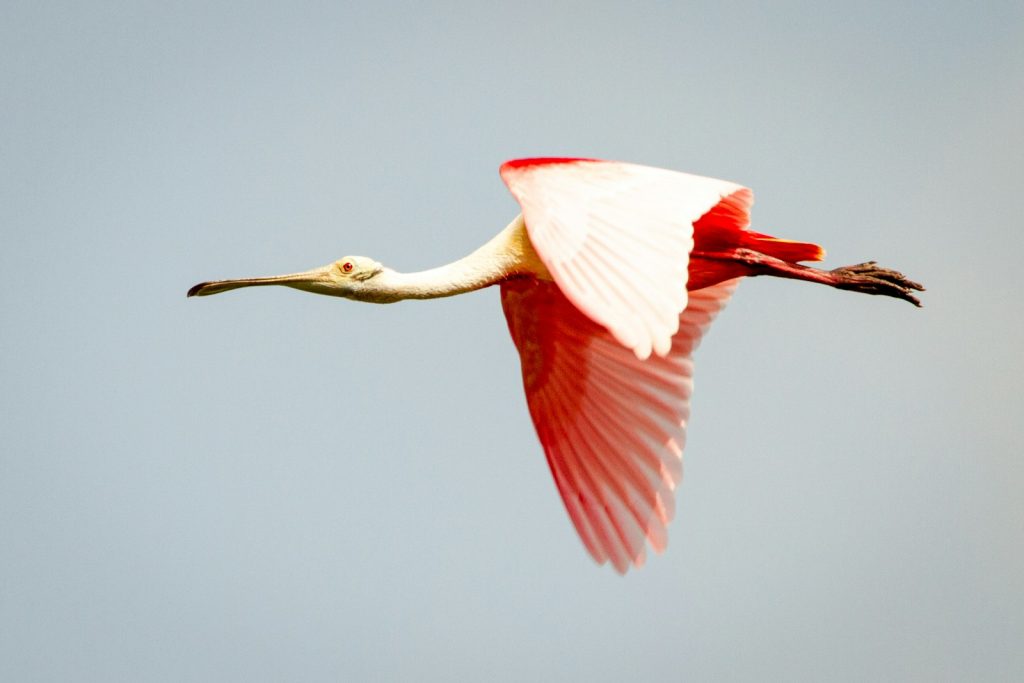
A roseate spoonbill flies overhead in Rockport, Texas. Photo: Joshua J. Cotten on Unsplash
Tips for Your Whooping Crane Trip
- Dress in layers: Coastal winter mornings on the water can be chilly and windy, even when the afternoon warms up.
- Bring binoculars: They make all the difference, whether you are on a boat or in an observation tower.
- Watch the weather: Fog and rough water can delay or cancel boat tours, so leave a little flexibility in your plans.
- Give the birds space: Whooping cranes are endangered and easily disturbed. Stay on trails and boardwalks, and follow your guide’s lead.
- Go early: Mornings are usually the best time for active birds and soft light for photos.
Where to Stay in Rockport
Rockport and neighboring Fulton make a relaxed, small-town base for a winter birding getaway. Vacation rentals are a great fit here, with plenty of homes and cottages close to the harbors where crane tours depart. If you prefer hotel amenities, you will find options in town, too, all within a short drive of Goose Island State Park and the road to the refuge.
Frequently Asked Questions
When can you see whooping cranes in Texas?
Whooping cranes spend the winter on the Texas coast. Mid-November through March is usually the best time to see them around Aransas National Wildlife Refuge and Rockport.
How many whooping cranes winter in Texas?
The U.S. Fish and Wildlife Service estimated about 540 whooping cranes, including at least 57 juveniles, wintered on the Texas coast in 2025 to 2026.
How far do whooping cranes migrate?
This population flies about 2,500 miles between Wood Buffalo National Park in Canada and the Texas Gulf Coast.
What is the best way to see whooping cranes?
A guided boat tour from Rockport or Fulton offers some of the closest views. You can also scan the marshes from the observation tower at Aransas National Wildlife Refuge.
A Winter Trip That Stays With You
There is something humbling about watching a bird that nearly vanished go about its day on a quiet Texas marsh, after flying thousands of miles to get there. Pack your binoculars, layer up, and give yourself a slow weekend on the coast. The cranes have come a long way. It is worth meeting them halfway.
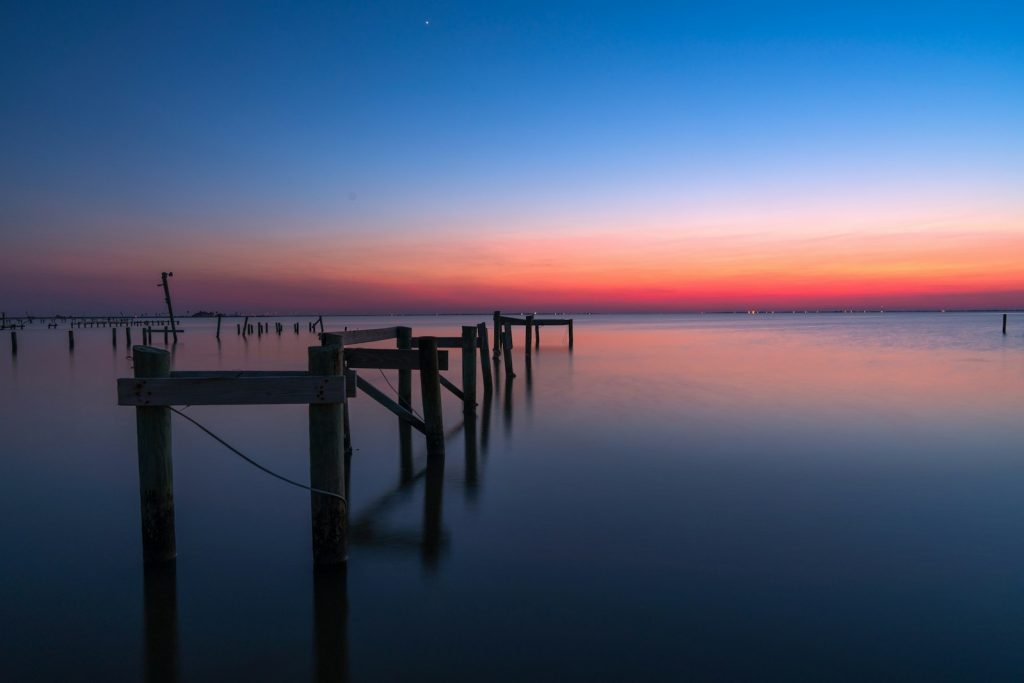
Sunset over Copano Bay near Rockport, Texas. Photo: Andrew Barlow on Unsplash
Keep Exploring Texas
- A Texas Guide to Subtropical Texas: America’s Unexpected Beach-Laden Getaway
- The Five Most Beautiful Beaches in Texas: A Coastal Guide to the Lone Star Shoreline
- Texas for Nature Nerds (and the Curious)
This post contains affiliate links. If you book through them, A Texas Guide may earn a small commission at no extra cost to you.


.jpg)
.jpg)