

Drive across the Texas Panhandle long enough and the land starts to feel like it has made up its mind. It is flat. Wheat fields, cotton, feedlots, windmills, and a sky so wide it seems to bend at the edges. You could be forgiven for assuming nothing dramatic happens out here.
Then, a short drive from Amarillo, the ground simply drops away.
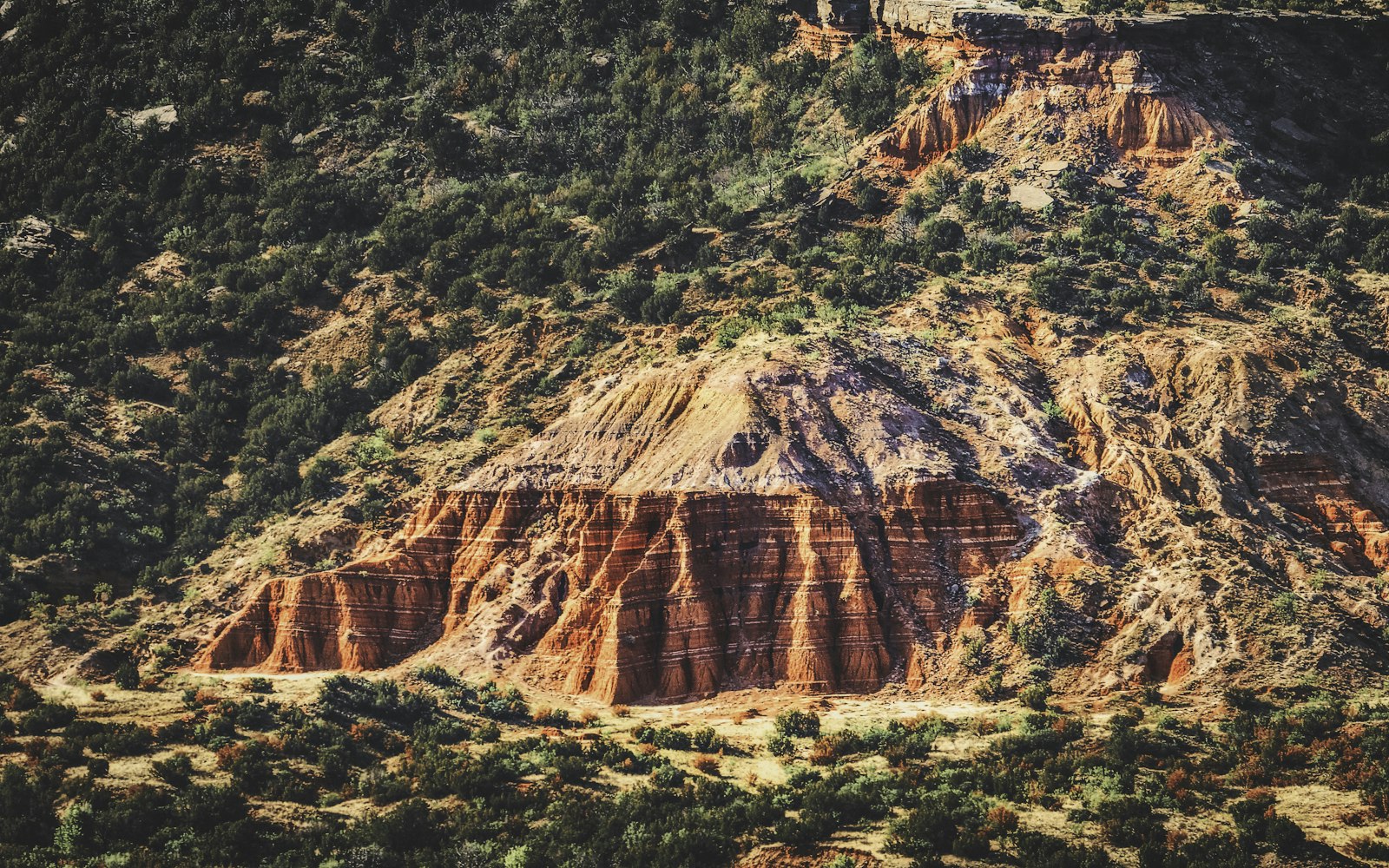
Palo Duro Canyon opens up beneath the plains like a secret the Panhandle has been keeping for a very long time. Red cliffs, striped slopes, juniper-dotted ledges, and a river bottom hundreds of feet below the rim. Texas Parks and Wildlife calls it the second-largest canyon in the country, and once you are standing at the edge, the nickname “the Grand Canyon of Texas” stops sounding like hometown bragging.
Fall is when the canyon is at its most welcoming. The brutal summer heat backs off, the light turns golden earlier in the afternoon, and the trails that feel punishing in July become the kind of hike you talk about for years. Here is how to make the most of it.
How Big Is Palo Duro Canyon, Really?
Big enough to humble you. The canyon averages about six miles wide and stretches to roughly 20 miles across in places, with depths of around 800 feet from rim to floor. Palo Duro Canyon State Park protects about 28,000 acres of it, making it the second-largest state park in Texas.
The canyon was carved by the Prairie Dog Town Fork of the Red River, which has spent an almost unimaginable stretch of time cutting down through the Caprock Escarpment at the edge of the Llano Estacado. The name comes from Spanish, too. “Palo duro” translates to “hard stick,” a nod to the tough juniper and mesquite wood that grows here.
Georgia O’Keeffe was one of the canyon’s earliest admirers. She painted it between 1916 and 1918 while teaching in nearby Canyon, and later described it as “a burning, seething cauldron, filled with dramatic light and color.” Stand on the rim at sunset and you will understand exactly what she meant.
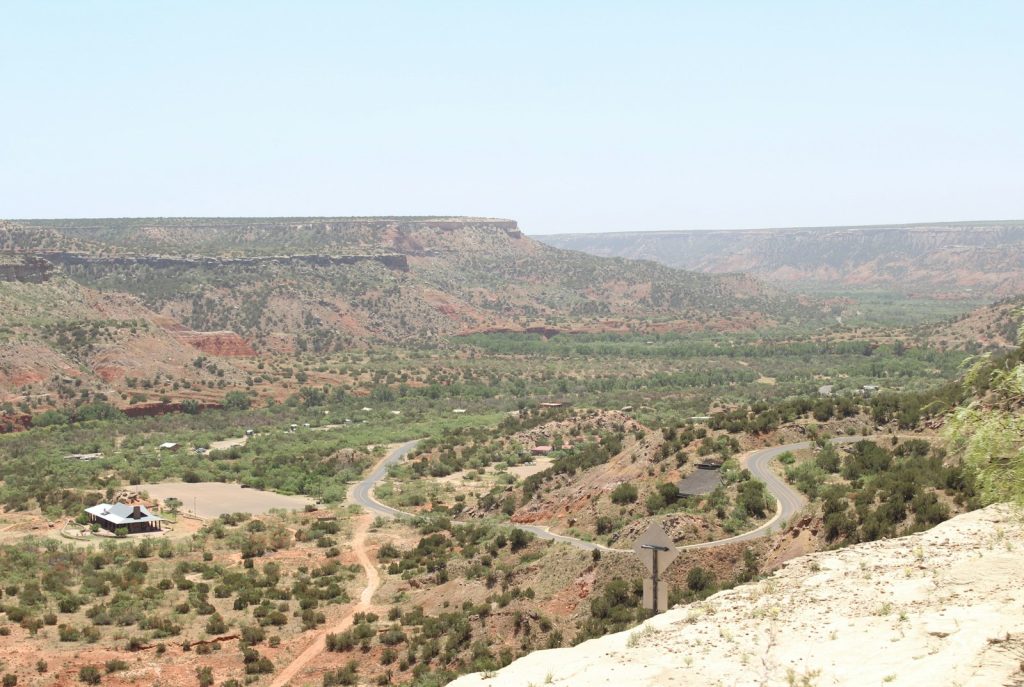
Looking out over the canyon floor from the rim at Palo Duro Canyon State Park near Canyon, Texas. Photo: Jasmine Goodwin on Unsplash
Why Fall Is the Best Time to Visit
Summer in the Panhandle is no joke. The canyon floor traps heat, shade is scarce, and the park can close trails when temperatures climb too high. By October, that pressure lifts. Mornings are crisp, afternoons are comfortable for hiking, and the cottonwoods along the river bottom start to shift toward gold.
Fall is also a quieter season. Summer crowds come for the outdoor musical and school vacations, but autumn visitors tend to be hikers, photographers, and road trippers who just want to sit on a rock and look at something enormous for a while. That said, the park still reaches capacity on busy weekends, so plan ahead (more on that below).
Hike the Lighthouse Trail
If Palo Duro has a celebrity, it is the Lighthouse, a towering hoodoo of hard sandstone that rises from the canyon like it was placed there on purpose. The Lighthouse Trail is the park’s signature hike, about 5.75 miles round trip, and it is the reason many people make the drive in the first place.
Most of the trail is a gentle, mostly level walk along the canyon floor, past formations with names like Capitol Peak and Castle Peak. The final stretch is a different story. The park rates the hike as difficult, and the last climb up to the base of the Lighthouse is steep and rocky. Take your time. The view at the top is worth every step.
Good to know: Start early, carry more water than you think you need, and wear real hiking shoes. There is very little shade on this trail, even in fall.
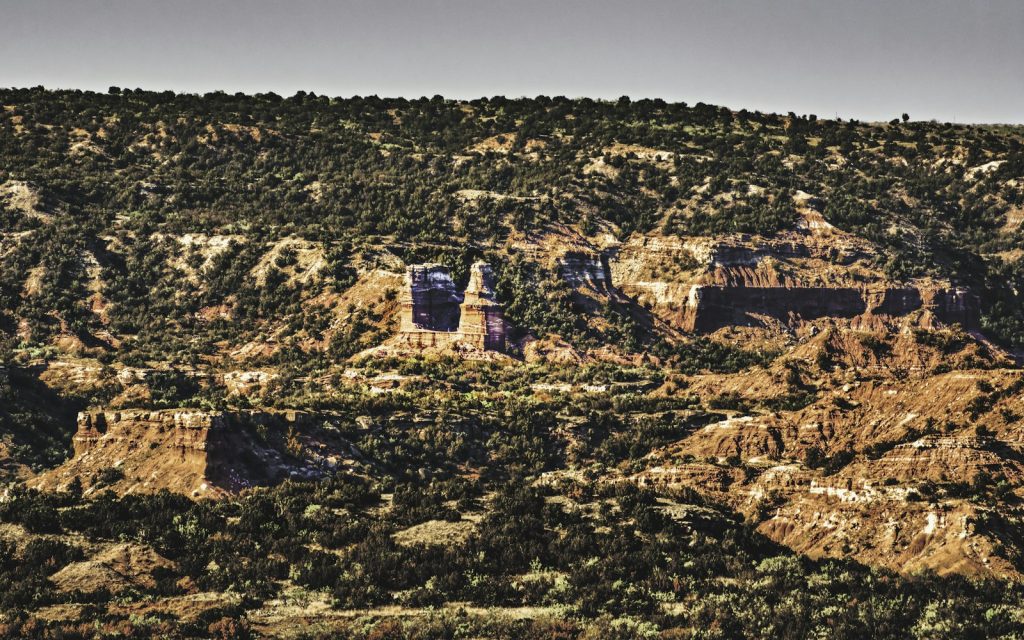
Layered red rock formations stretch across Palo Duro Canyon in the Texas Panhandle. Photo: K. Mitch Hodge on Unsplash
Learn to Read the Rocks
Part of what makes Palo Duro so striking is that you can see time stacked right in front of you. The lower slopes and canyon floor are the deep red of the Quartermaster Formation. Above that sits the Tecovas Formation, a candy-striped layer of red, white, yellow, and lavender shale and sandstone. Many visitors call these banded slopes the Spanish Skirts, and they are especially photogenic in the low light of a fall afternoon.
The ledges and the Lighthouse itself are carved from the harder Trujillo sandstone, and the caprock at the very top belongs to the much younger Ogallala Formation. You do not need to be a geologist to enjoy it, but knowing the layers turns a pretty view into a story.
More Ways to Explore the Canyon
- Drive to the canyon floor: The park road winds down from the rim to the bottom of the canyon, with pullouts and overlooks along the way. It is a great option if hiking is not on the agenda.
- Take the CCC Trail: Built by the Civilian Conservation Corps in 1934, this roughly 1.5-mile trail connects the rim to the canyon floor.
- Ride or bike the trails: The park has more than 30 miles of trails for hiking, mountain biking, and horseback riding.
- Visit the El Coronado Lodge: The stone lodge built by the CCC now serves as the park’s visitor center, and the view from the rim behind it is one of the best in the park.
- Look for wildlife: Keep an eye out for roadrunners darting across the trail, along with mule deer, wild turkeys, and the many birds that call the canyon home.
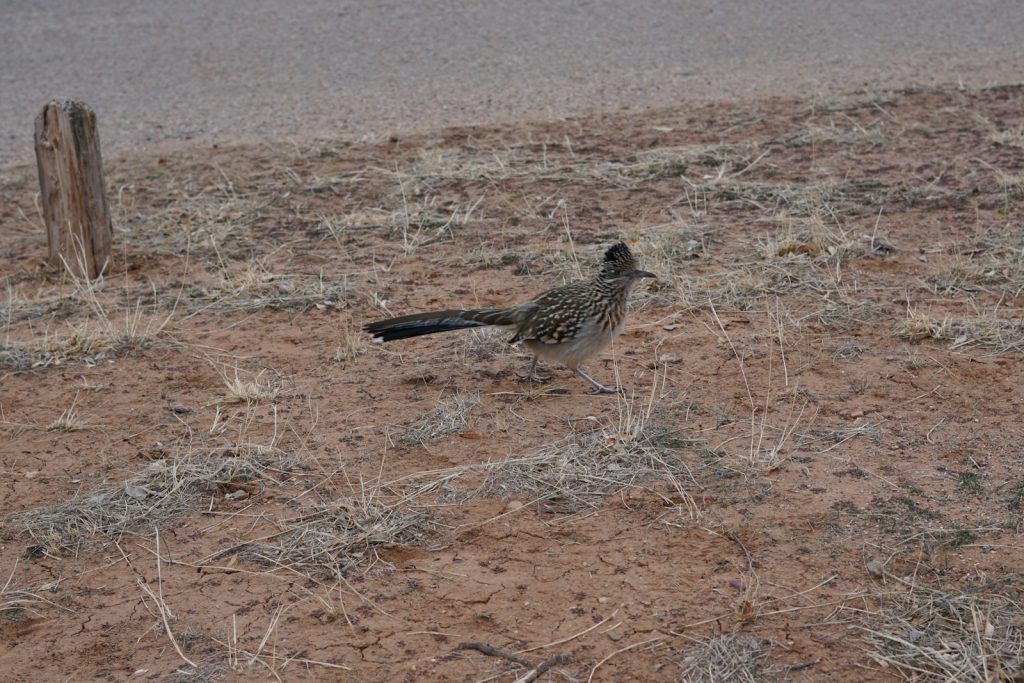
A roadrunner pauses on the canyon floor at Palo Duro Canyon. Photo: Joe Forget on Unsplash
A Canyon Full of History
People have lived in and around Palo Duro Canyon for thousands of years. Coronado’s expedition passed through in 1541, and the canyon later became home to Comanche and Kiowa communities who sheltered there through the winters.
That chapter ended violently. On September 28, 1874, during the Red River War, U.S. Army troops under Colonel Ranald S. Mackenzie attacked a camp of Comanche, Kiowa, and Cheyenne families in the canyon, capturing and killing most of their horses and burning their winter supplies. Without them, the families were forced back to the reservation. It is a sobering piece of Texas history, and worth pausing on as you hike.
Two years later, rancher Charles Goodnight drove 1,600 longhorns into the canyon, and with partner John Adair he founded the JA Ranch in 1877. The state purchased land for the park in 1933, and Palo Duro Canyon State Park opened in 1934, built by the hands of young CCC workers whose stonework still stands today.
Stay for the Stars
Out here, far from big-city lights, the night sky puts on a show of its own. If you are camping or staying in one of the park’s cabins, step outside after dark and look up. On a clear fall night, the stars stretch from rim to rim.
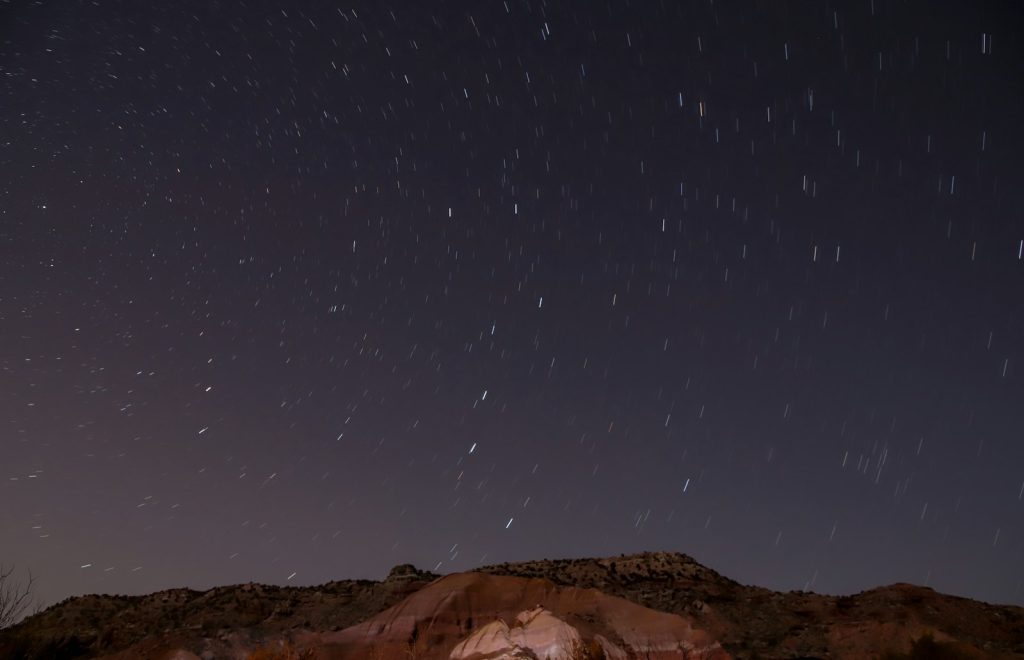
Stars fill the night sky above the rim of Palo Duro Canyon. Photo: Ryan Carpenter on Unsplash
Tips Before You Go
- Reserve ahead: Texas Parks and Wildlife recommends reservations for both camping and day use, since the park often reaches capacity.
- Entrance fee: Daily entry is $8 per adult, and kids 12 and under get in free.
- Check trail conditions: Trails can close after rain or during extreme heat, so check with the park before you set out.
- Coming back in summer? The family-friendly TEXAS Outdoor Musical plays at the park’s Pioneer Amphitheater during the summer season, Tuesdays through Sundays.
Where to Stay Near Palo Duro Canyon
For the most memorable stay, book one of the park’s own cabins. There are three cabins on the canyon rim and four Cow Camp cabins down on the canyon floor, plus campsites and glamping options. Reservations go through Texas State Parks and fill up quickly on fall weekends.
The small college town of Canyon is the closest home base, with easy access to the park entrance. Amarillo, a little farther north, has the widest choice of hotels and is a fun stop on its own, especially if you want to explore its stretch of historic Route 66. Vacation rentals are a great fit for families or groups who want a kitchen and extra room to spread out after a long day on the trail.
- Browse hotels in Canyon on Expedia
- Find vacation rentals near Canyon on Vrbo
- Browse Amarillo hotels on Expedia
Frequently Asked Questions
Is Palo Duro Canyon really the second-largest canyon in the U.S.?
Texas Parks and Wildlife describes it as the second-largest canyon in the country. It averages about six miles wide and reaches around 800 feet deep.
How long is the Lighthouse Trail?
The Lighthouse Trail is about 5.75 miles round trip. Most of it is fairly level, but the final climb to the base of the Lighthouse is steep, and the park rates the hike as difficult.
How much does it cost to visit Palo Duro Canyon State Park?
Daily entry is $8 per adult, and children 12 and under are free. Reservations are recommended, especially on weekends.
When is the best time to visit Palo Duro Canyon?
Fall and spring offer the most comfortable hiking weather. Summer can be extremely hot on the canyon floor, though it is also the season for the TEXAS Outdoor Musical.
The Panhandle’s Best-Kept Secret
Palo Duro Canyon is proof that Texas never shows you everything at once. You have to drive out across the plains, trust the flat horizon, and wait for the ground to open up. When it does, pack your water, lace up your boots, and give yourself a full day. The canyon has been taking its time for millions of years. You can afford to slow down, too.
Keep Exploring Texas
- What Are the Top Must-See Attractions in Amarillo’s Route 66 Historic District?
- Big Bend Basecamps: Where to Stay Near Big Bend National Park
- Where to See Fall Colors in Texas: 9 Leaf-Peeping Spots Worth the Road Trip
This post contains affiliate links. If you book through them, A Texas Guide may earn a small commission at no extra cost to you.
