

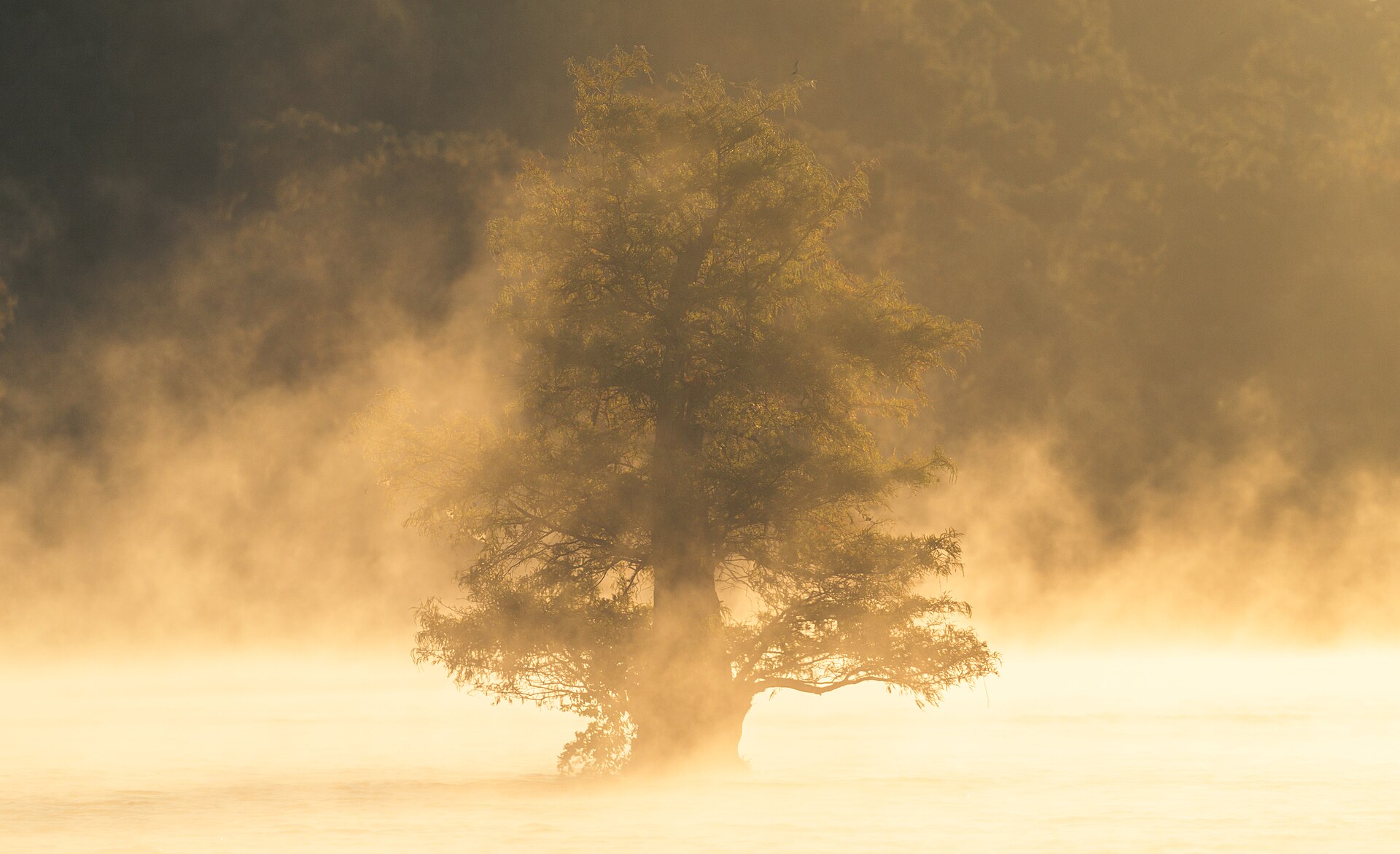
Ask most people to picture Texas and they will describe wide-open ranchland, desert highways, or a big-city skyline. Almost nobody pictures a swamp.
But way out in the far northeast corner of the state, right on the Louisiana line, there is a place where giant bald cypress trees rise straight out of dark water, Spanish moss hangs from every branch, and narrow boat roads twist through the trees like hallways in a green cathedral. It is called Caddo Lake, and it looks far more like the Deep South than anything you would expect to find in Texas.
It is also a long drive from just about everywhere. Dallas is roughly two and a half hours away, Houston even farther. So, is it worth the trip? That depends on what kind of traveler you are. Ask yourself a few questions first.
1. Do You Love Places That Feel Like Another World?
Caddo Lake covers more than 25,000 acres and holds one of the largest flooded cypress forests in the United States. Some of the trees here are believed to be centuries old, with wide, buttressed trunks and knobby “knees” poking up through the water around them.
Paddle or boat through it and you lose all sense of the outside world. There are no straight lines, no skyline, and very little sound beyond birds, frogs, and the splash of a fish. It is no surprise the lake was designated a Wetland of International Importance under the Ramsar Convention in 1993.
If that sounds magical, you will love it here. If you prefer your nature with a gift shop and a paved path, keep reading anyway. You might be surprised.
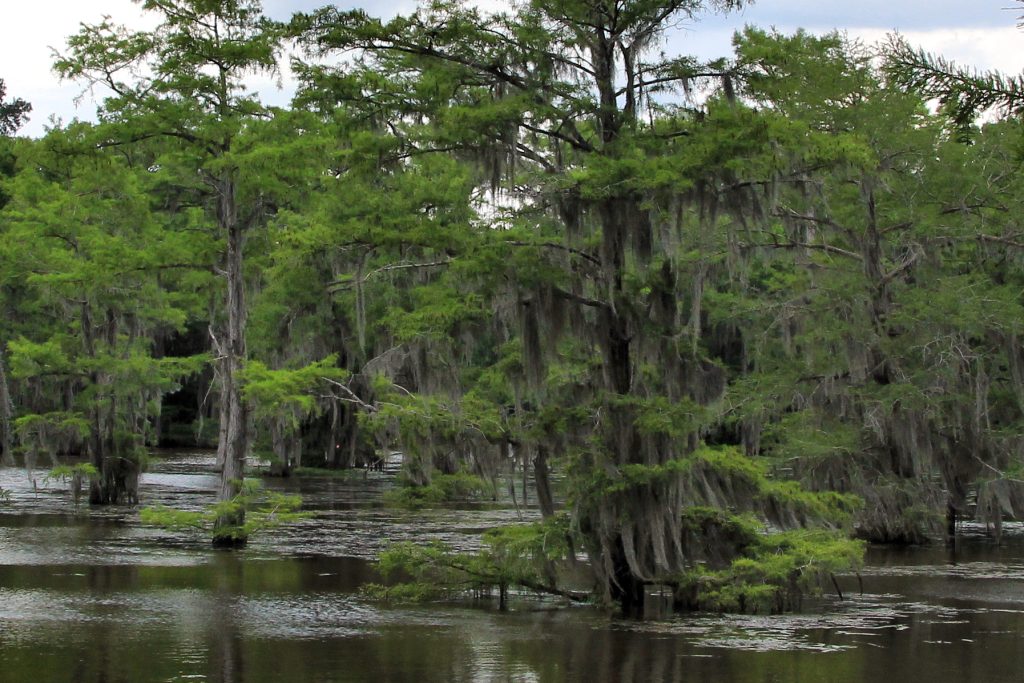
Bald cypress trees draped in Spanish moss rise from the water at Caddo Lake in Harrison County, Texas. Photo: Larry D. Moore via Wikimedia Commons, CC BY 4.0
2. Are You Curious About How a Lake Is Born?
Texas is full of lakes, but nearly all of them were made by people building dams. Caddo Lake has a more unusual origin story. Most geologists believe it formed when the Great Raft, an enormous logjam on the Red River that stretched for about 100 miles, backed water up into a low-lying basin.
The Caddo people, for whom the lake is named, tell a different story: that the lake was formed by powerful earthquakes, often connected to the New Madrid earthquakes of 1811 and 1812. Either way, Caddo Lake is one of the few naturally formed lakes in Texas, although a dam built in the 1900s now helps control its water levels.
History buffs will appreciate this, too. In the 1800s, steamboats churned through these waters and up Big Cypress Bayou to Jefferson, which became one of the busiest river ports in the region. When the Great Raft was cleared and water levels dropped, the steamboat era faded, but you can still visit Jefferson’s historic downtown today.
3. Would You Rather Paddle Than Hike?
Caddo Lake is a paddler’s playground. Texas Parks and Wildlife maintains a network of marked paddling trails through the lake and its bayous, ranging from easy loops to routes best left to experienced paddlers. The Cathedral Paddling Trail, a roughly 3.8-mile round trip, winds through towering cypress trees and is one of the prettiest options for a first visit.
No canoe? No problem. Caddo Lake State Park rents canoes from the park office, and its Saw Mill Pond and Big Cypress Bayou are calm places to get your bearings. If you would rather let someone else do the steering, local outfitters such as Caddo Outback Tours offer guided boat rides from the Uncertain area. Call ahead, since many small operators keep limited schedules.
Good to know: The boat roads can look alike, and it is easier to get turned around than you might think. Bring a map, stick to marked trails, and let someone know your plans.
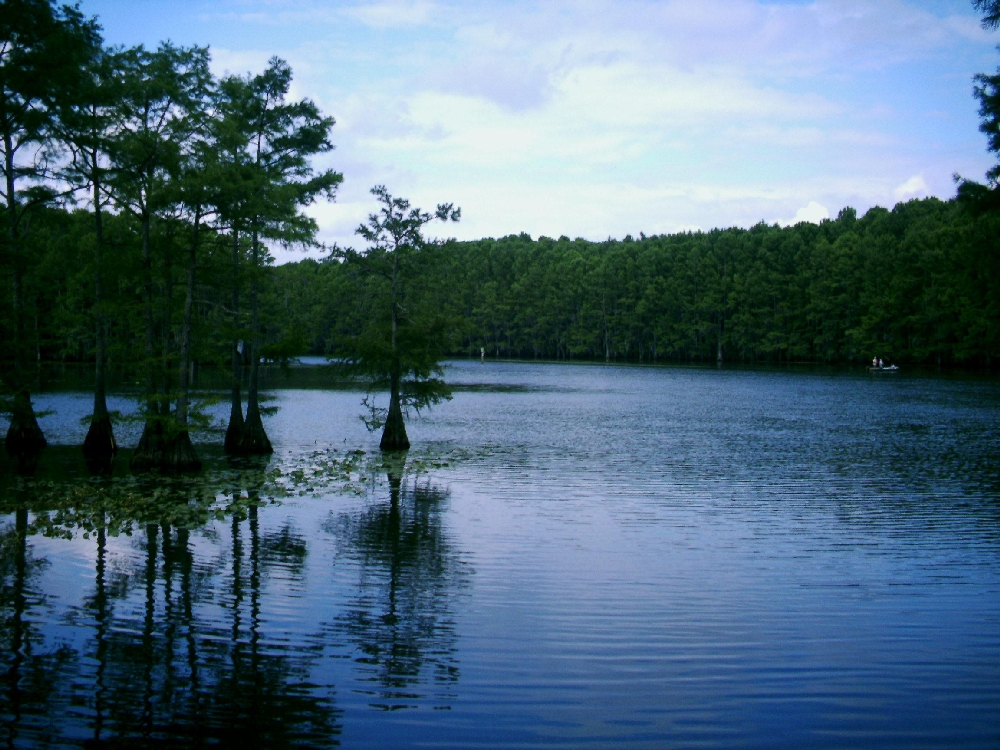
Bald cypress trees along the water at Caddo Lake State Park in the Piney Woods of East Texas. Photo: Jay Carriker via Wikimedia Commons, CC BY-SA 2.5
4. Do You Want to See Fall Color Without Leaving Texas?
Here’s a secret most Texans do not know. Bald cypress trees are conifers, but unlike pines, they drop their needles every year. Before they do, those feathery needles turn shades of rust, copper, and burnt orange. In late fall, usually around November, the entire swamp takes on a warm, glowing color that reflects off the still water.
It is one of the most unusual fall foliage experiences in the state, and it makes autumn a fantastic time to plan a visit. Cooler weather also means fewer mosquitoes, which you will appreciate more than you know.
5. Are You Okay With Small-Town Quiet?
The tiny community of Uncertain sits right on the lake’s shore and is home to only a few dozen residents. Nobody knows for certain how Uncertain got its name, which feels exactly right for a town tucked inside a maze of cypress trees. There are a handful of marinas, rental cabins, and local businesses, but this is not a destination for nightlife or a packed itinerary.
Days at Caddo Lake move slowly. You fish, you paddle, you sit on a dock and watch the light change. If that kind of slow sounds restorative, you will fit right in.
What to Do at Caddo Lake
- Explore Caddo Lake State Park: Hike about 2.5 miles of trails, fish from the pier, or rent a canoe. Day entry is $4 for adults, and kids 12 and under are free.
- Paddle a marked trail: Choose from several paddling trails maintained by Texas Parks and Wildlife, from easy routes to more challenging ones.
- Take a guided boat tour: Local guides know the boat roads and can point out wildlife and the oldest trees.
- Go fishing: The lake is home to more than 70 species of fish. In Texas state parks, you do not need a fishing license to fish from the shore or pier.
- Watch for wildlife: Look for herons, egrets, bald eagles, river otters, beavers, and yes, the occasional alligator sunning on a log.
- Visit Jefferson: The nearby historic town is known for its antique shops, brick streets, and preserved 1800s architecture.
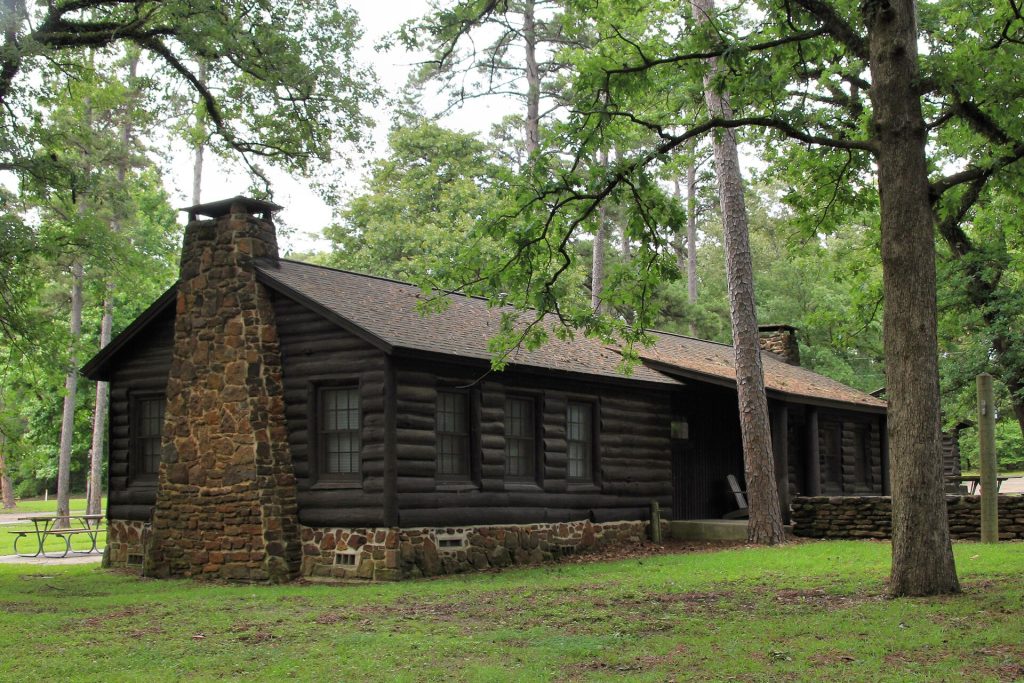
One of the historic cabins at Caddo Lake State Park, built by the Civilian Conservation Corps in the 1930s. Photo: Larry D. Moore via Wikimedia Commons, CC BY 4.0
Signs Caddo Lake Might Not Be for You
- You want a sandy beach and clear blue water.
- You need a full lineup of restaurants and shopping within walking distance.
- You are not a fan of bugs, humidity, or wildlife.
- You prefer a fast-paced trip with lots of attractions.
Caddo Lake does not try to entertain you. It simply invites you to slow down and look around.
Where to Stay Near Caddo Lake
For a classic stay, book one of the historic cabins at Caddo Lake State Park. They were built by the Civilian Conservation Corps in the 1930s and range from two-person to six-person units. Reserve early, especially for fall weekends.
Vacation rentals around Uncertain and Karnack put you right on or near the water, and many of them come with lake views. For more dining and shopping options, base yourself in Jefferson, less than half an hour away, and make the lake a day trip.
- Find Caddo Lake vacation rentals near Uncertain on Vrbo
- Find vacation rentals in Jefferson on Vrbo
- Browse Jefferson hotels on Expedia
Frequently Asked Questions
Is Caddo Lake a natural lake?
Caddo Lake is one of the few naturally formed lakes in Texas. Most geologists believe it was created by the Great Raft, a massive logjam on the Red River. A dam built in the 1900s now helps regulate its water level.
When is the best time to visit Caddo Lake?
Fall is a favorite. The bald cypress trees turn rusty orange in late fall, usually around November, and cooler temperatures mean fewer bugs. Spring is also lovely, with mild weather and fresh green growth.
Are there alligators in Caddo Lake?
Yes, alligators live in Caddo Lake, along with many other reptiles, birds, and mammals. Keep a respectful distance and never feed wildlife.
How far is Caddo Lake from Dallas?
Caddo Lake is roughly two and a half hours east of Dallas, mostly via I-20.
So, Should You Go?
If you have ever wanted to drift beneath moss-draped trees in a place that feels a world away from everyday Texas, then yes. Go to Caddo Lake. Go in the fall, when the cypress trees glow and the air finally cools off. Bring a paddle, a little patience, and no plans at all.
If you need beaches and boardwalks, Texas has plenty of those, too. But you would be missing one of the most beautiful, unexpected corners of the state.
Keep Exploring Texas
- Where to See Fall Colors in Texas: 9 Leaf-Peeping Spots Worth the Road Trip
- What Are the Best Fishing Lakes in Texas Near Popular Towns?
- Texas for Nature Nerds (and the Curious)
This post contains affiliate links. If you book through them, A Texas Guide may earn a small commission at no extra cost to you.


