

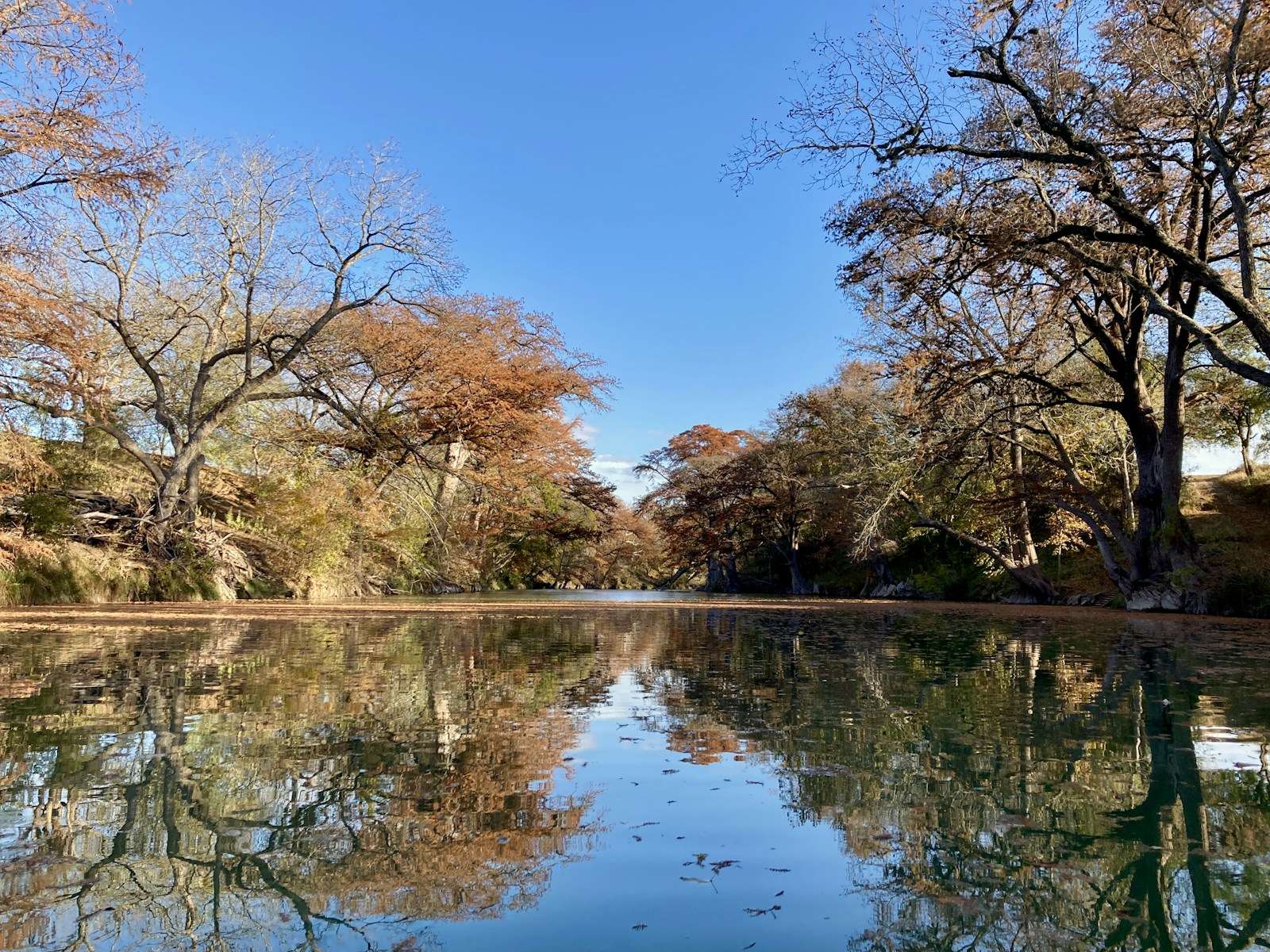
Let’s clear something up right away: Texas absolutely has fall. Sure, it might show up a little fashionably late, and yes, you might still be wearing flip-flops when it does. But once those first cool fronts roll through, parts of the Lone Star State put on a color show of red maples, golden cottonwoods, and copper-toned cypress that can hold its own against any postcard from up north.
The trick is knowing where to look and when to go. So grab a thermos of something warm (or iced, we don’t judge), and let’s hit the road to the best places to see fall foliage in Texas.
When Is Fall Foliage Season in Texas?
Fall color in Texas generally runs from late October through November, with timing that depends on where you are and what the weather’s been up to. Far West Texas and the Hill Country tend to peak around late October into mid-November, while East Texas often keeps its color going later into the fall.
Mother Nature sets the schedule, not us, so a warm spell or a dry summer can shift things by a week or two. Our best advice? Check the park’s foliage report right before you load up the car.
1. Lost Maples State Natural Area (Vanderpool)
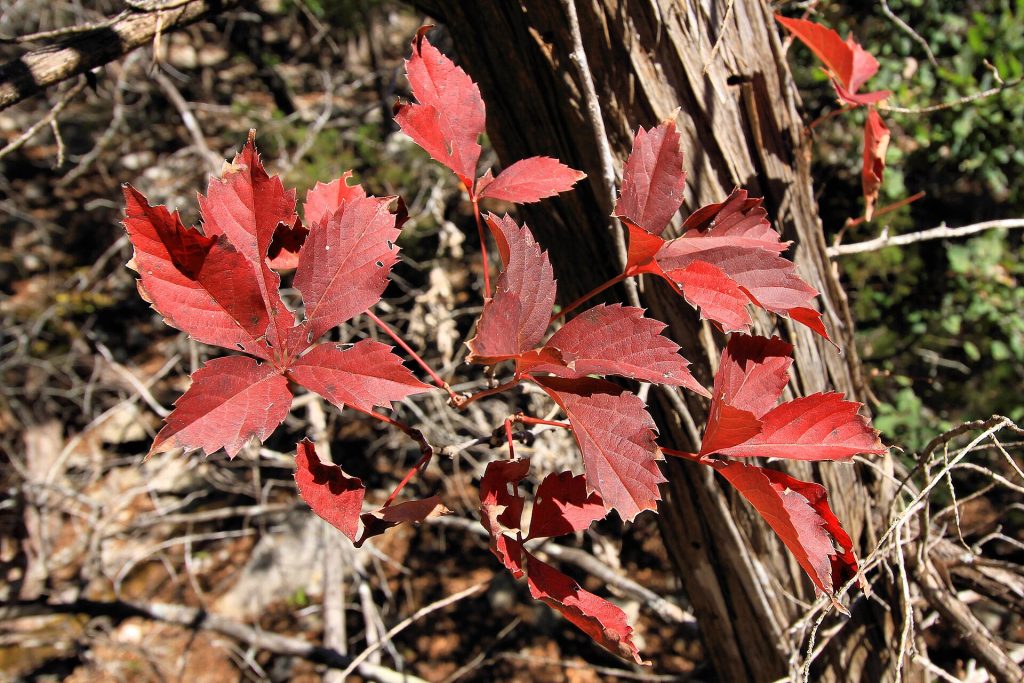
Virginia creeper showing off its fall reds at Lost Maples State Natural Area. Photo: Larry D. Moore via Wikimedia Commons, CC BY 4.0
If Texas had a fall foliage capital, this would be it. Tucked into the Hill Country near Vanderpool, Lost Maples is famous for its stands of bigtooth maples that blaze in red, orange, and gold. Peak color usually lands somewhere between the last week of October and the second week of November, depending on the weather.
Good to know: Day passes are required, and fall weekends sell out fast, so book online before you go. Texas Parks and Wildlife posts weekly foliage updates on its website, and you can call (830) 966-3413, option 3, for a recorded foliage report. If the parking lots fill up, the park closes to new visitors, so an early start is your friend.
2. McKittrick Canyon at Guadalupe Mountains National Park (Far West Texas)
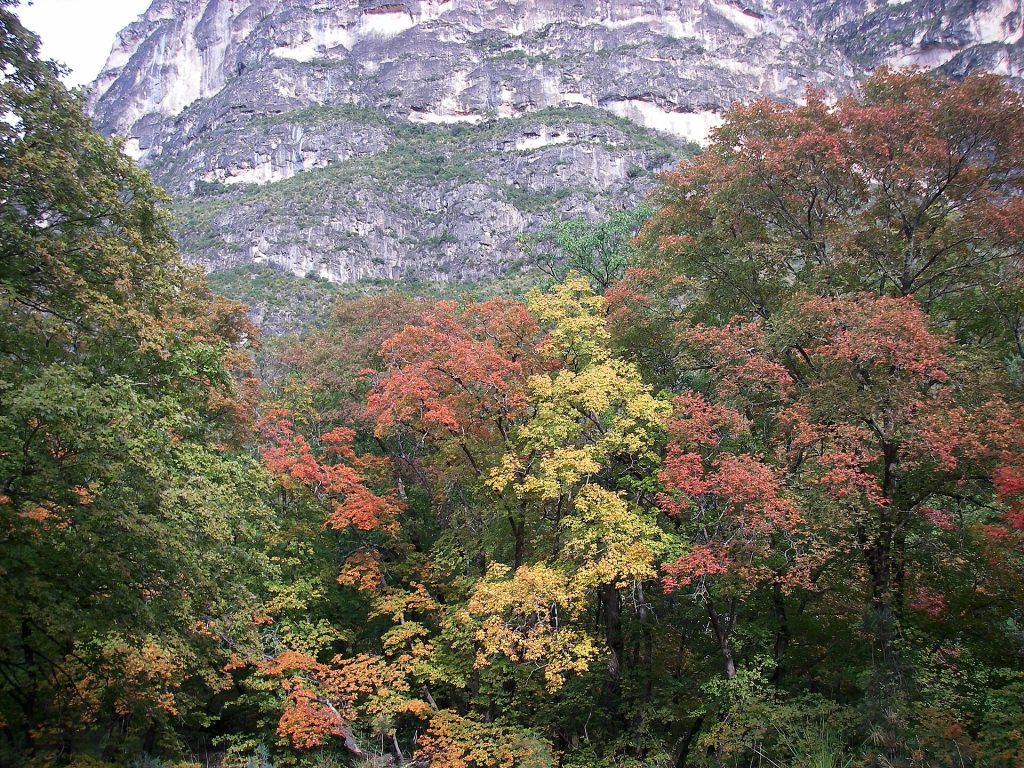
Fall colors along the McKittrick Canyon Trail in Guadalupe Mountains National Park. Photo: Leaflet via Wikimedia Commons, CC BY-SA 3.0
Out in the far corner of West Texas, McKittrick Canyon is a desert surprise. Bigtooth maple, walnut, and ash trees turn the canyon into a ribbon of red, yellow, and orange, usually peaking from the last week of October into the first week of November.
Good to know: The hike to Pratt Cabin is a popular out-and-back. Wear sturdy shoes, pack more water than you think you need, and aim for a weekday if you can, since fall is the park’s busy season.
3. Palo Duro Canyon State Park (Canyon)
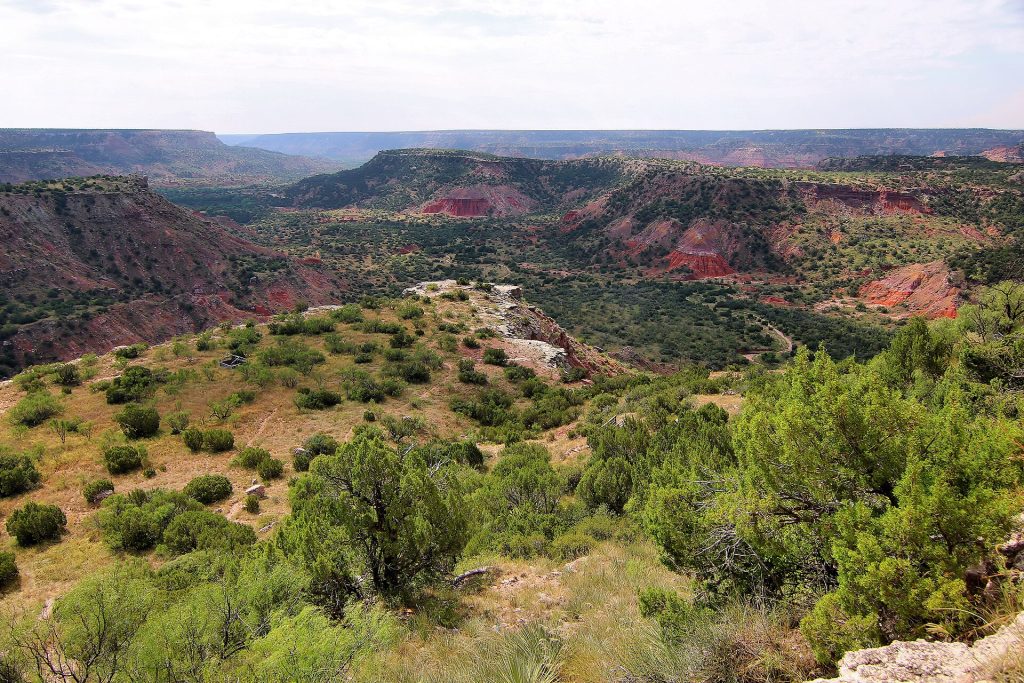
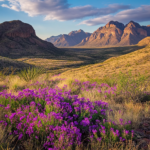
The view from the CCC Overlook at Palo Duro Canyon State Park. Photo: Larry D. Moore via Wikimedia Commons, CC BY 4.0
About 25 miles south of Amarillo, the second-largest canyon in the country gets a seasonal glow-up. Cottonwoods turn bright yellow against the rusty red canyon walls, and it’s the kind of view that makes you pull over for “just one more photo” about twelve times.
Good to know: With more than 30 miles of trails for hiking and biking, there’s plenty of room to roam. The park occasionally closes for events, so check trail conditions and reservations on the state park website first.
4. Garner State Park (Concan)
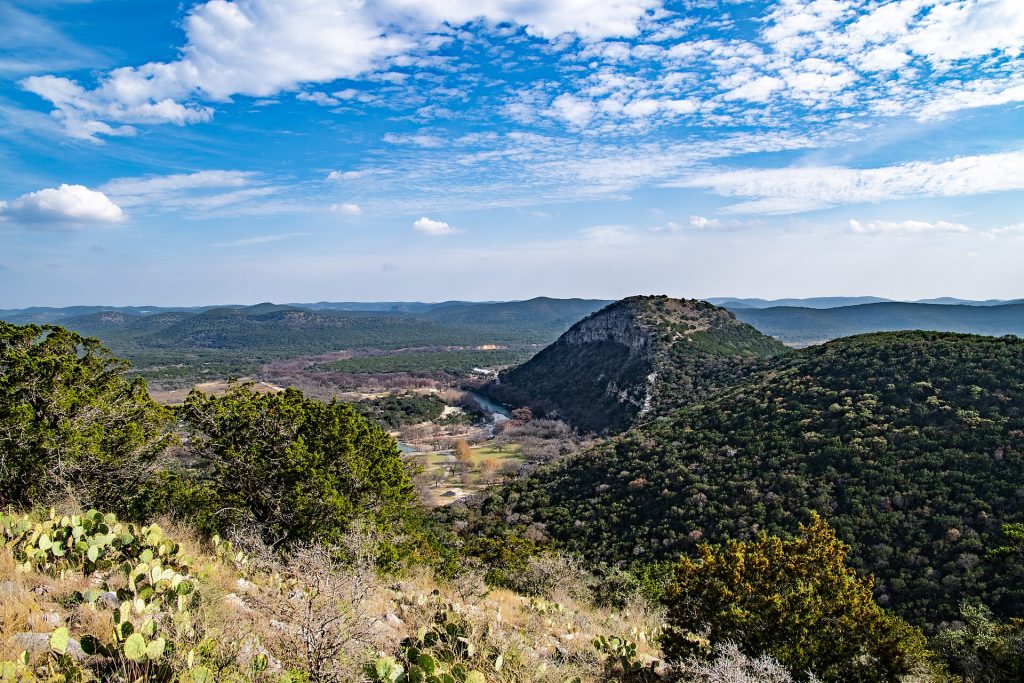
Old Baldy and the Frio River at Garner State Park. Photo: Corey Leopold via Wikimedia Commons, CC BY 2.0
Garner is a summer favorite, but fall might be its secret best season. Cypress, oak, persimmon, and mesquite add pops of red, orange, and yellow along the Frio River in October and November, and the crowds thin out once school is back in session.
Good to know: Lace up for more than 16 miles of trails, or rent a kayak and float the river for a leaf-peeping view from the water. Lost Maples is a short drive away, so you can easily pair the two into one Hill Country weekend.
5. Guadalupe River State Park (Spring Branch)
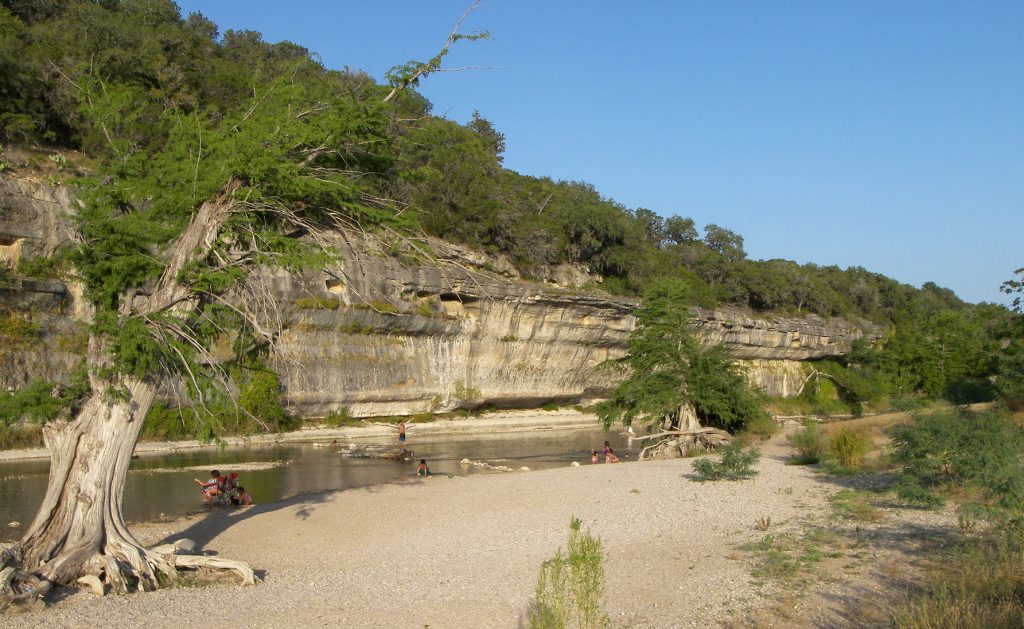
Limestone bluffs along the river at Guadalupe River State Park. Photo: Larry D. Moore via Wikimedia Commons, CC BY 4.0
Just north of San Antonio, this river park is an easy day trip for city folks craving some fall scenery. The short Bald Cypress Trail follows the river, and the River Overlook Trail leads to a cliff with views over the water and the valley below.
Good to know: The park is the starting point for a paddling trail, so bring a kayak or canoe if you’ve got one. Trails are natural and uneven, so skip the sandals.
6. McKinney Falls State Park (Austin)
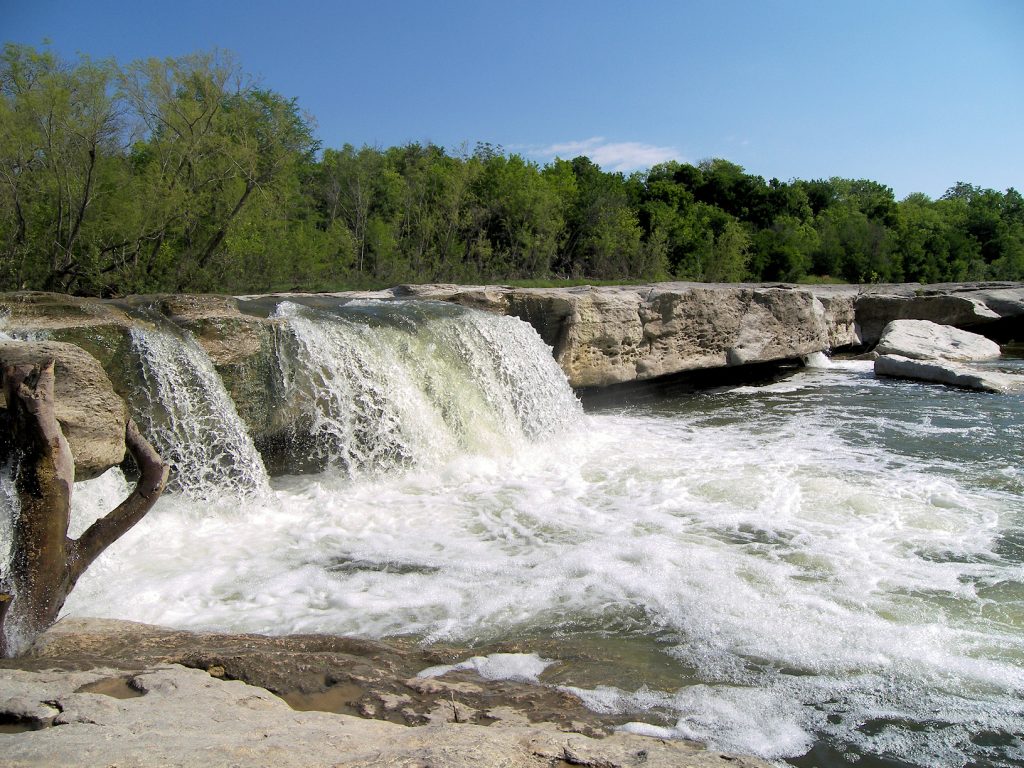
The Lower Falls at McKinney Falls State Park. Photo: Larry D. Moore via Wikimedia Commons, CC BY 4.0
Don’t feel like a long drive? McKinney Falls sits just outside Austin and serves up red oaks and cypress in warm reds and golds. While you’re there, say hi to “Old Baldy,” one of the oldest bald cypress trees on public land in Texas.
Good to know: There are more than nine miles of trails along Onion Creek, plus campsites if you want to turn a day trip into a cozy weekend. Swimming isn’t recommended in fall, so leave the floaties at home.
7. Daingerfield State Park (East Texas Piney Woods)
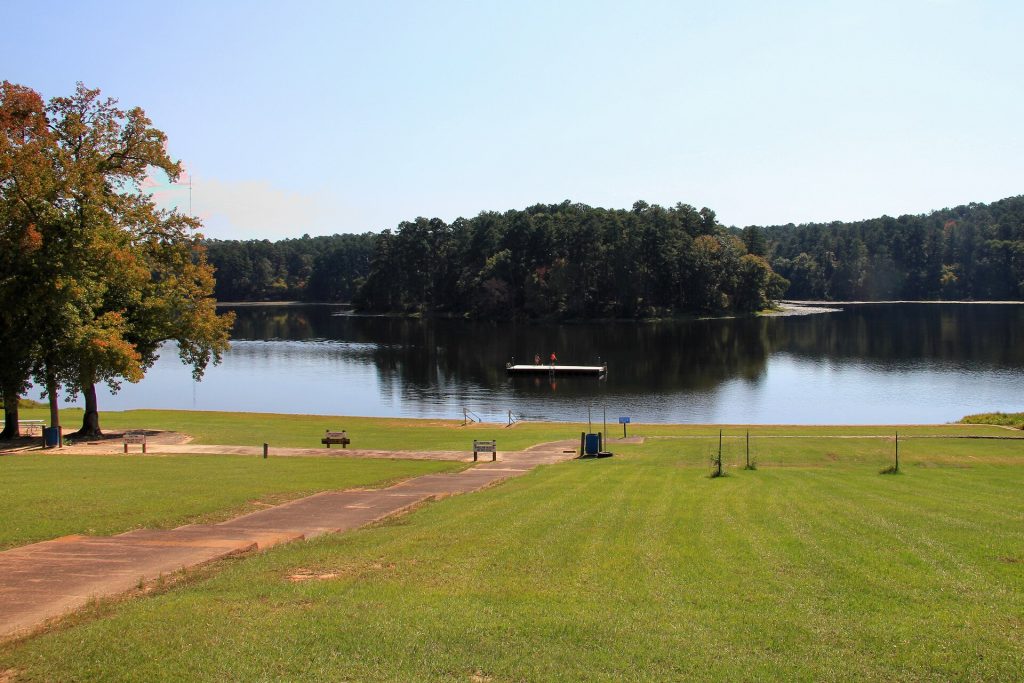
The lake at Daingerfield State Park in the East Texas Piney Woods. Photo: Larry D. Moore via Wikimedia Commons, CC BY 4.0
East Texas brings a whole different flavor of fall. At Daingerfield, oaks and dogwoods shift to yellow and orange among the evergreen pines, and the colors reflect beautifully off the park’s lake.
Good to know: The Rustling Leaves Trail is an easy loop around the lake that’s perfect for families. For a bigger view, take the Mountain View Trail up to the park’s highest hill.
8. Tyler State Park (Tyler)
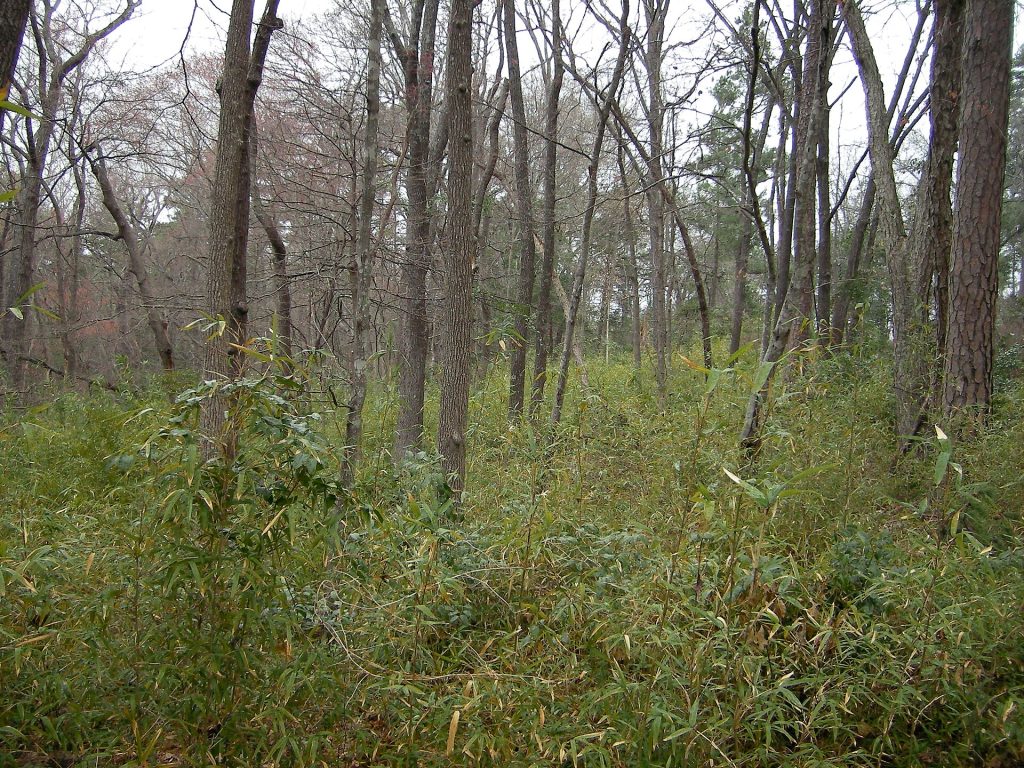
Tall pines and hardwoods at Tyler State Park. Photo: Danny S. via Wikimedia Commons, CC BY-SA 3.0
Another East Texas gem, Tyler State Park pairs a spring-fed lake with tall pines and hardwoods that bring warm color to the woods in late fall. It’s a great choice for a lazy afternoon of hiking, paddling, or simply sitting by the water with a good book.
Good to know: East Texas color often hangs on a little later than the Hill Country, so this is a solid backup plan if you miss peak season out west.
9. Caddo Lake (Uncertain)
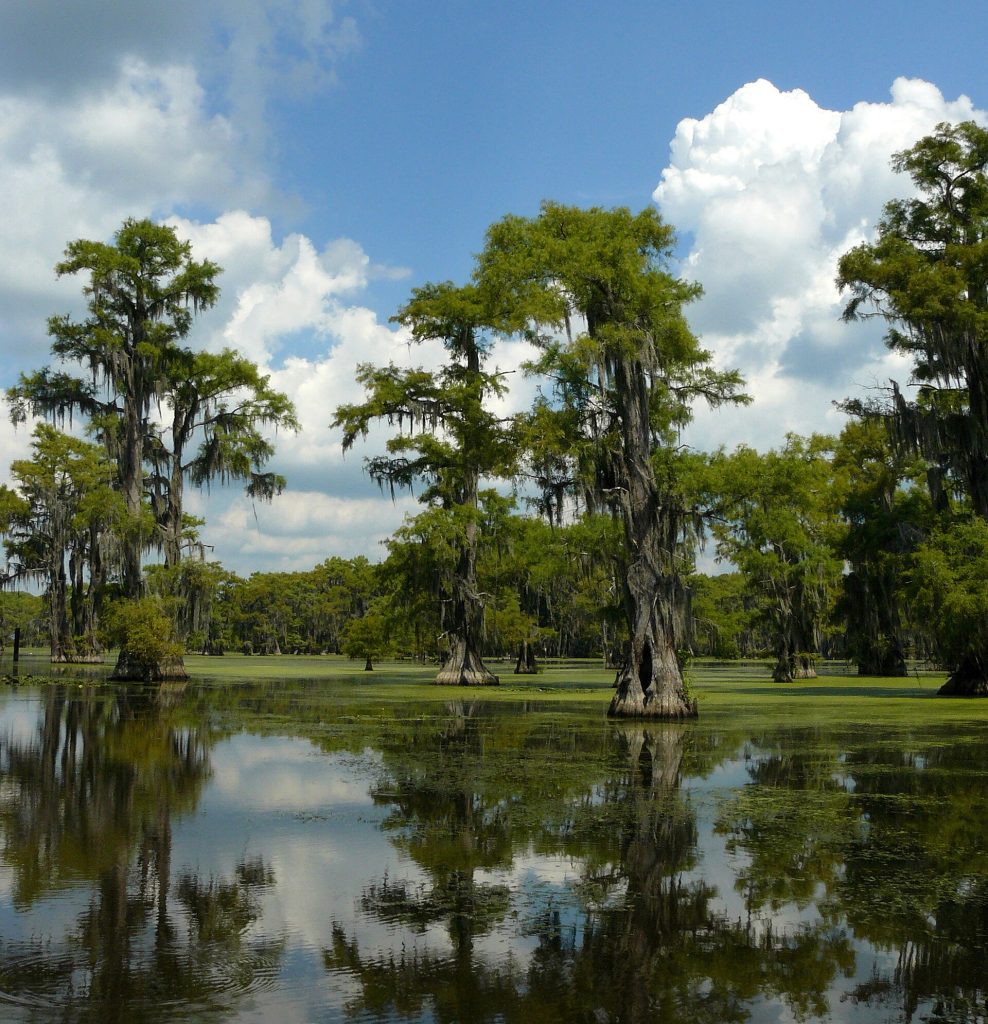
Bald cypress trees rising from the water at Caddo Lake. Photo: Thomas and Dianne Jones via Wikimedia Commons, CC BY 2.0
Yes, the nearest town is really called Uncertain, and no, we’re not making that up. Caddo Lake’s moss-draped bald cypress trees turn a rusty copper color as fall settles in, creating one of the most magical and moody scenes in the entire state.
Good to know: The best way to see it is from the water. Book a guided boat tour or paddle the marked boat roads for an up-close look at the cypress swamp.
Tips for Planning Your Texas Fall Foliage Road Trip
- Check foliage reports first. Colors can change week to week, so look up the latest update before you leave.
- Reserve ahead. Many Texas state parks require day passes, and popular spots sell out on fall weekends.
- Go early or go on a weekday. You’ll beat the crowds, snag parking, and catch that soft morning light for photos.
- Dress in layers. Texas fall mornings can be chilly and afternoons can be downright warm. Classic Texas.
- Make a weekend of it. Pair your leaf-peeping with a cozy cabin, a small-town café, or a stop at a local winery.
Frequently Asked Questions About Fall Foliage in Texas
Does Texas really have fall colors?
It sure does! Spots like Lost Maples, McKittrick Canyon, and the East Texas Piney Woods are known for vibrant reds, oranges, and yellows each autumn.
When is the best time to see fall leaves in Texas?
Late October through November is the sweet spot for most of the state. West Texas and the Hill Country usually peak first, with East Texas often holding color later.
Where is the best place to see fall foliage in Texas?
Lost Maples State Natural Area is the most famous, thanks to its bigtooth maples. McKittrick Canyon in Guadalupe Mountains National Park is a close second for hikers.
Do I need reservations to visit Lost Maples in the fall?
Yes. Day passes are required and weekends sell out quickly, so book online as early as you can.
Ready to Chase the Color?
Fall in Texas may be fleeting, but that’s what makes it so special. Whether you’re hiking a maple-lined canyon out west or paddling through cypress in East Texas, there’s a pocket of autumn color waiting for you. So pick a spot, pack the snacks, and go find your favorite fall view. And when you do, tag us on Instagram at @atexasguide. We’d love to see where your road trip takes you!
Looking for more Hill Country adventures? Check out our guide, Hill Country Weekenders: 48 Hours of Swim Holes, Trails, and Starry Nights.





-0156.JPG)
