

Every state has its symbols. Most of them sit politely in textbooks. Texas, naturally, picked one you can eat.
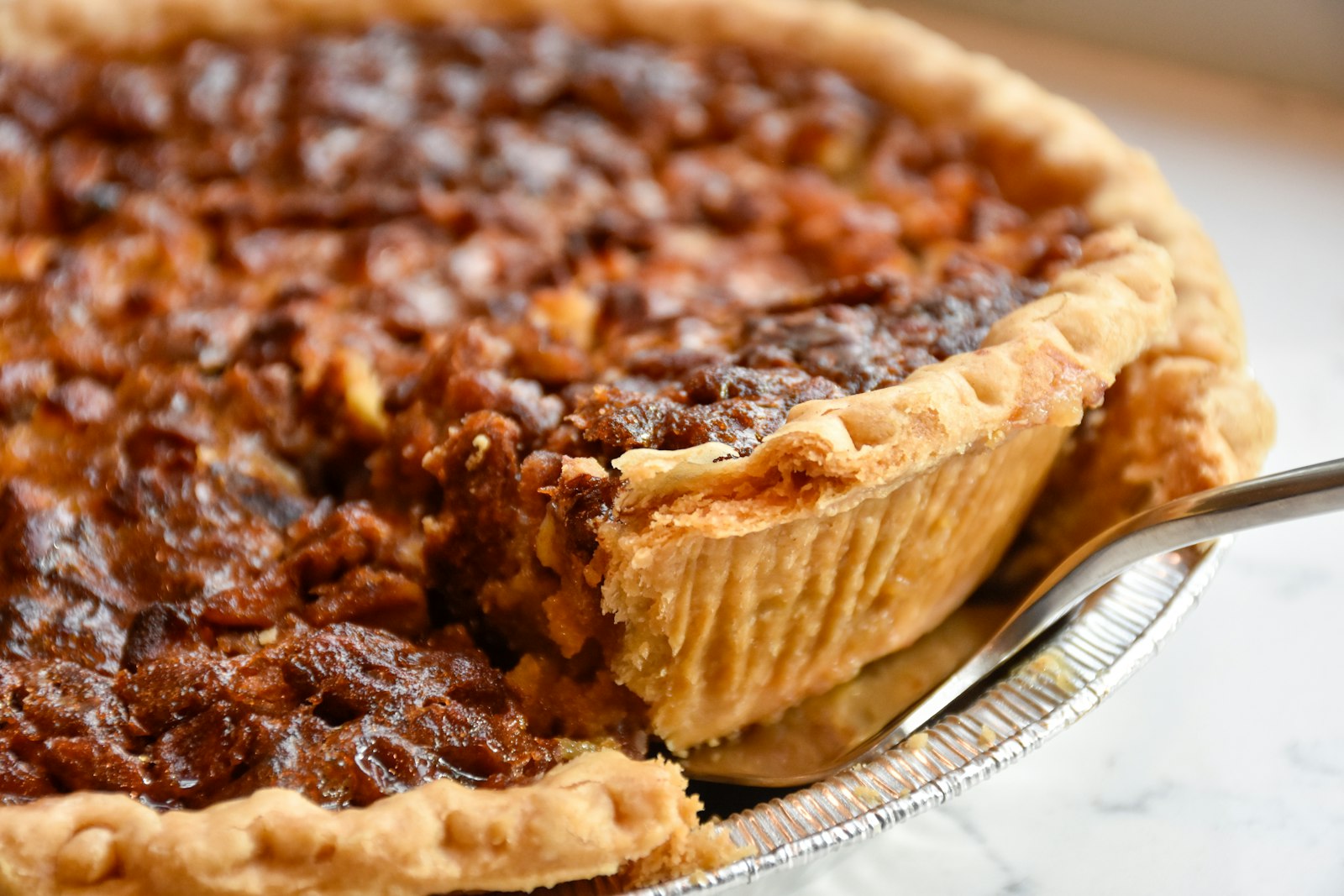
The pecan is the official state tree of Texas. It is also the official state health nut. And when it gets baked into a buttery, gooey, caramel-sweet pie, it becomes the official state pie, too. Few things are as woven into Texas life as this humble nut, from grandma’s holiday table to the shade tree in a small-town courthouse square.
And fall is when it all comes alive. As the weather cools, pecan growers across the state start shaking their trees, roadside stands fill up with fresh-crop nuts, and bakeries get serious about pie. If you have ever wanted an excuse for a slow, delicious road trip, this is it.
How the Pecan Became a Texas Icon
Long before anyone called it a state symbol, the pecan was a lifeline. Native peoples relied on pecans to get through hard winters, and the Spanish explorer Cabeza de Vaca wrote about them in the 1500s. Pioneers later used pecan wood for building, cooking, and heating, and gathered the nuts for food. Today, pecan trees are native to 150 of Texas’s 254 counties.
The tree’s official status has a wonderfully Texan backstory. Former Governor Jim Hogg asked that a pecan tree be planted at the head of his grave instead of a stone monument. He died in 1906, and in 1919 the Texas Legislature named the pecan the state tree. The state health nut designation followed in 2001.
As for the pie? That honor came in 2013, and it came with help from some very persuasive first-graders in Georgetown who pushed for pecan pie to be recognized. Texas lawmakers agreed, and the pecan earned its third official title.
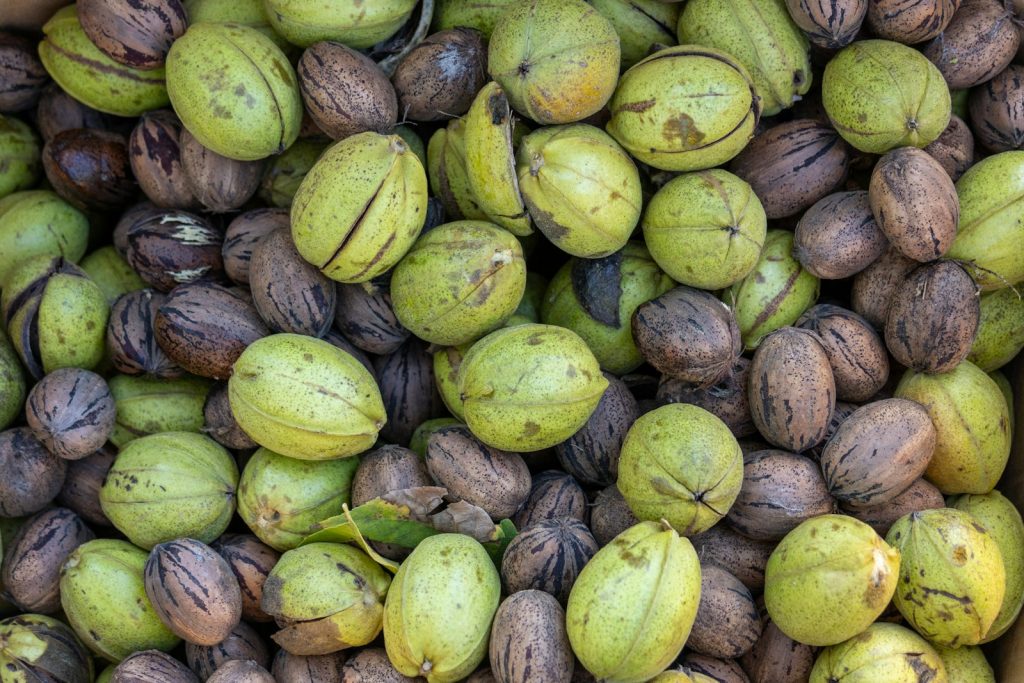
Freshly harvested pecans, some still wrapped in their green outer hulls. Photo: Mushon Tamir on Unsplash
When Is Pecan Season in Texas?
Pecan harvest in Texas generally begins in mid-October and runs through December, though timing shifts with the weather and the variety. Pecan trees produce every year, but growers will tell you they tend to have a bigger crop every other year.
For travelers, that means late fall is the sweet spot. Shops and orchards have fresh-crop pecans in stock, and the drive through the Hill Country and Central Texas comes with crisp air and changing leaves along the rivers.
Stop One: San Saba, the Pecan Capital of the World
San Saba, a small town northwest of Austin near where the San Saba and Colorado rivers meet, proudly calls itself the Pecan Capital of the World. It earned that swagger thanks in large part to Edmund E. Risien, an English cabinetmaker who stopped here in 1874 on his way to California and never left.
Risien became fascinated with the native pecans growing along the river and began experimenting with them, helping to popularize the thin-shelled, or paper-shell, pecan. Much of his work traces back to a single native tree that became known as the Mother Tree, which still stands in an orchard outside town. In 1931, the Texas Legislature honored Risien as a world leader in the pecan industry.
Today, his legacy lives on through family growers like Millican Pecan, whose owners are fifth-generation pecan farmers who trace their roots to Risien. Their retail shop east of town has sold raw pecans, pies, candies, and pecan butter, with extra hours during harvest. Check current hours before you go, since small-town shops often keep seasonal schedules.
Stop Two: Seguin and the World’s Largest Pecan
No Texas road trip is complete without a slightly ridiculous roadside photo, and Seguin delivers. In 1962, a local dentist named Edmund “Doc” Darilek built a 1,000-pound pecan statue, about five feet long, and placed it near the Guadalupe County Courthouse. He proudly called it the World’s Largest Pecan.
Then, in 1982, a town in Missouri built a bigger one. Seguin was not about to let that stand. A local leadership class built a new fiberglass pecan, about 16 feet by 8 feet, which now sits outside the Texas Agricultural and Heritage Center. The original still holds its spot downtown, so you can visit both and decide which one deserves the crown.
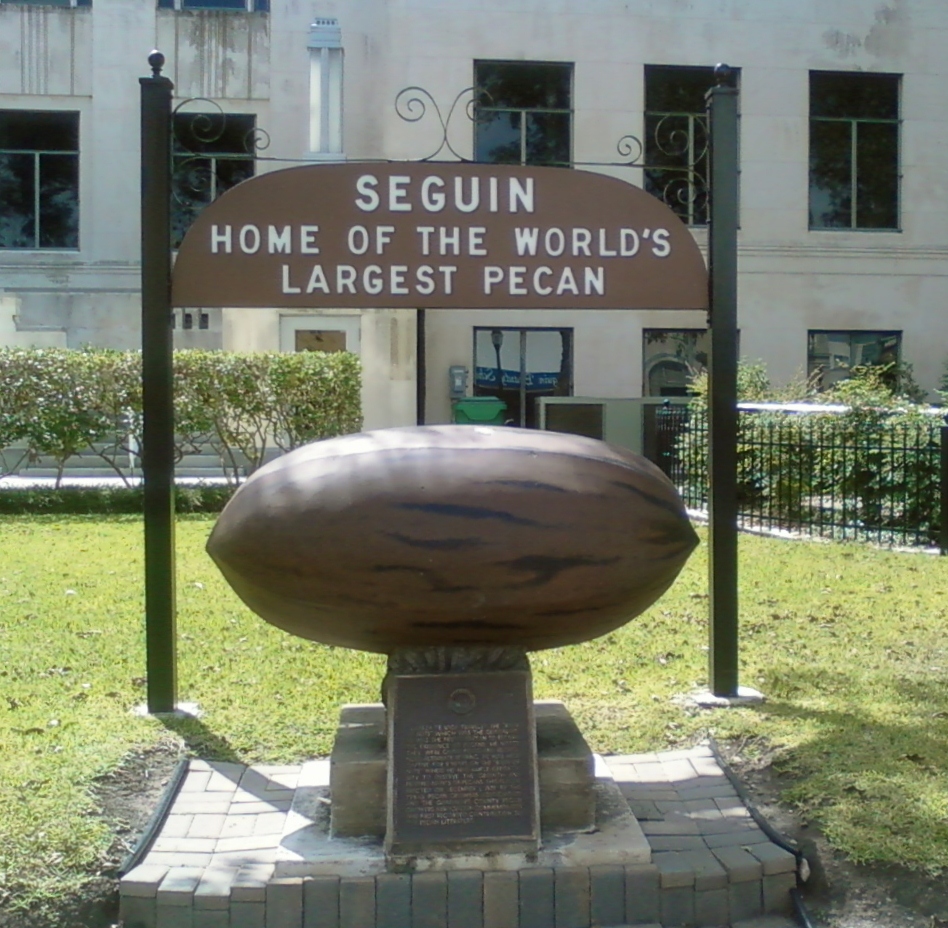
The original World’s Largest Pecan statue in Seguin, built in 1962. Photo: Lezlie K. King via Wikimedia Commons, CC BY-SA 3.0
While you are in town, look for the Pape Pecan House, a longtime Seguin pecan shop that is also known for its nutcracker museum, which has claimed a collection of more than 8,000 nutcrackers. Hours can change, so call ahead.
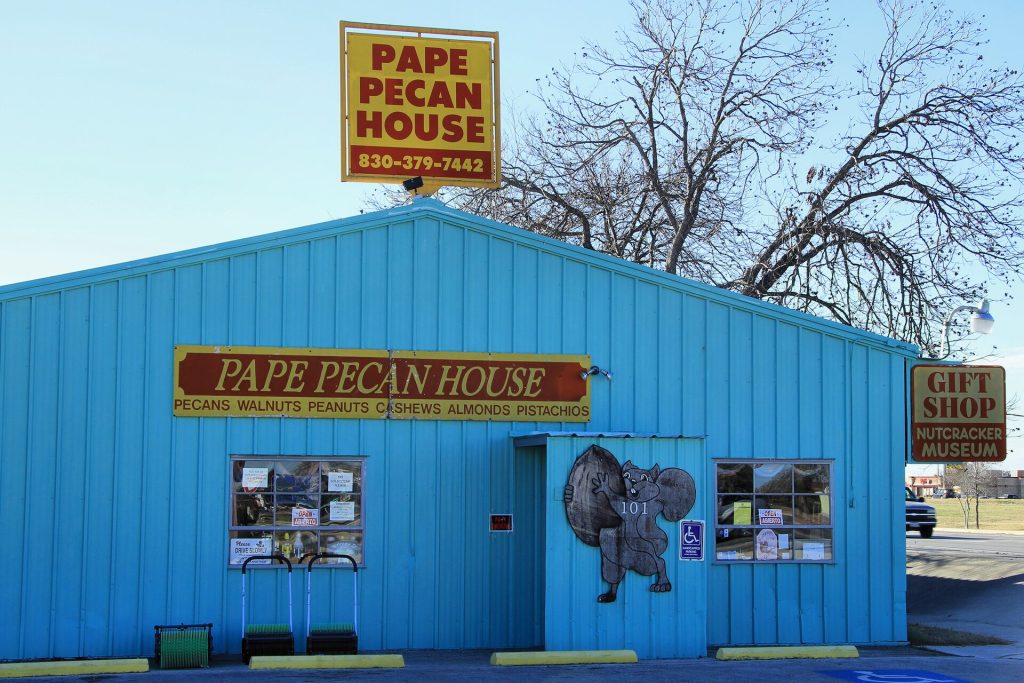
Pape Pecan House in Seguin, home of Pape’s Nutcracker Museum. Photo: Larry D. Moore via Wikimedia Commons, CC BY 4.0
How to Enjoy Pecans Like a Texan
- Buy fresh-crop pecans: Pecans picked this season taste noticeably richer and more buttery. Ask shop owners which varieties they recommend.
- Try the native pecans: Smaller and harder to crack than the big paper-shell varieties, native pecans are often praised for their flavor.
- Eat a slice of the state pie: Pecan pie is everywhere in Texas this time of year. Kyle, just south of Austin, even calls itself the Pie Capital of Texas.
- Store them right: Pecans have a high oil content, so keep them in the fridge or freezer to stay fresh for your holiday baking.
- Pick up pralines: These sugary pecan candies are a classic treat at Texas markets and Tex-Mex restaurants.
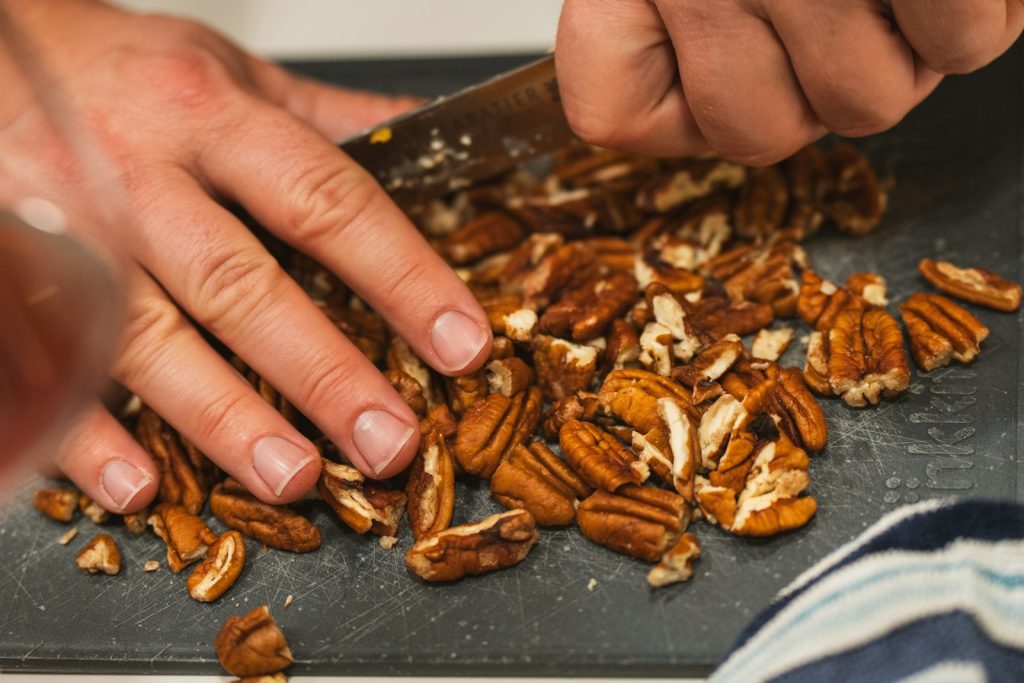
Chopping pecans for holiday baking, a fall ritual in kitchens across Texas. Photo: Olivier Amyot on Unsplash
Where to Stay on Your Pecan Road Trip
San Saba is a small town, so a vacation rental is often the easiest way to settle in and enjoy the quiet. Seguin sits just east of San Antonio along I-10, which makes it a handy overnight stop with more hotel options, and it puts you within easy reach of the Hill Country and other Central Texas favorites.
Frequently Asked Questions
Why is San Saba called the Pecan Capital of the World?
San Saba is known for its large concentration of pecan orchards and for the work of Edmund E. Risien, who helped popularize the paper-shell pecan in the late 1800s.
Where is the World’s Largest Pecan?
Seguin, Texas, claims the title. The original 1962 statue sits near the Guadalupe County Courthouse, and a larger 16-foot fiberglass pecan stands outside the Texas Agricultural and Heritage Center.
Is pecan pie the official state pie of Texas?
Yes. Texas named pecan pie its official state pie in 2013. The pecan has been the state tree since 1919 and the state health nut since 2001.
When is the best time to buy fresh Texas pecans?
Harvest typically starts in mid-October and runs through December, so late fall is the best time to find fresh-crop pecans.
A Nut Worth the Drive
There is something wonderfully Texan about building an entire road trip around a nut. But spend a fall afternoon in San Saba, take a goofy photo with Seguin’s giant pecan, and bring home a bag of fresh-crop pecans for your holiday baking, and it will make perfect sense. In Texas, even the state tree comes with dessert.
Keep Exploring Texas
- Texas Winter Food Traditions: What Locals Eat During the Holidays
- Lockhart, Texas: The Barbecue Capital of the World, and More!
- Where to Stay in Fredericksburg: Hill Country Cottages, Inns, and Family Rentals
This post contains affiliate links. If you book through them, A Texas Guide may earn a small commission at no extra cost to you.


