


For years, California’s grip on the film and television industry has been under quiet siege.
Georgia came for it with generous tax credits and a hungry crew base. Then New Mexico chipped away with big desert skies and infrastructure that grew fast. And Canada, especially British Columbia, has proven to be a long-term threat.
But now, Texas — vast, versatile, and increasingly well-funded — keeps making a stronger case.
The myth that everything has to be shot in Hollywood is being tested by spreadsheets and location scouts alike. So what does it actually cost to shoot in Texas compared to Los Angeles? The short answer: less, but with caveats. The long answer is shaping the future of American production geography.
The Price of Space: Austin vs. LA, Hour by Hour
Let’s start with the basics — space.
If you’re booking an indie or small-to-mid-level commercial shoot, Austin’s numbers are appealing. Data from Peerspace shows Austin sound stages averaging around $130 per hour. Recording and production rooms can dip as low as $45 or crest above $150 depending on equipment and location. It’s a functional, flexible setup that supports music videos, branded content, docuseries, and indie features — all without the bloat of Hollywood overhead.

In Los Angeles, the real estate itself isn’t always the issue — it’s what comes with it. Many stage facilities don’t list standard hourly rates because they build custom packages. But when comparable cyclorama or flex stages are listed publicly, prices often land higher than their Austin counterparts. And that’s before union minimums, LA city permitting, parking fees, and location congestion start compounding the daily cost.
It’s not that Los Angeles is exorbitantly more expensive — it’s that hidden costs tend to multiply. For producers working on tight turnarounds or conservative budgets, Texas offers simpler math.
Incentives: The Battle of Cash vs. Credits
This is where things get political — and financial.
Texas offers a cash grant through the Texas Moving Image Industry Incentive Program. The state will reimburse a percentage of eligible in-state spend, which means productions don’t need tax liability to benefit — they just need to follow the rules and get approved. In 2023, Texas committed over $200 million more into the program, with updated guidelines for 2025-2026 expected to open the door even wider.
California, for its part, is fighting hard to keep productions home. The newly expanded Film & TV Tax Credit Program 4.0 is worth $750 million annually through 2030, and now offers refundable credits — meaning even productions without California tax obligations can get money back. That’s a big shift. Refundability takes what was once only useful to studios or high-income entities and makes it meaningful for a broader range of producers.
So what’s the real-world difference?
Cash grants like Texas’s can be faster and more administratively efficient — as long as you meet the eligibility criteria (and don’t mind a grant queue). But California’s new refundability paired with a deeper vendor base and bigger budgets means that for the right size project, Los Angeles may actually outcompete Texas on net incentive value — even with higher base costs.
Check Out: The Best Fishing Lakes in Texas Near Popular Towns
Permitting and Production Support: The Local Advantage
Texas has been quietly smart about infrastructure.
Over 175 cities are now part of the Film Friendly Texas program, which standardizes permitting and provides a direct liaison to local government. That means producers can spend less time in red tape and more time on set. Cities like Austin, Dallas, San Antonio, and even smaller towns like Bastrop or Laredo have built real production muscle.
California, of course, has the battle-tested system run by FilmLA, which efficiently handles permits across Los Angeles County. It works — until it doesn’t. High demand can create traffic jams (figurative and literal), and popular locations like downtown LA or the Hollywood Hills carry hefty price tags for closures, police presence, and community management.
So while LA offers unmatched density — locations, prop houses, wardrobe rentals, post facilities, all in a 10-mile radius — Texas offers speed and simplicity, especially outside of major metro cores.
Texas Stage Capacity: Still Growing, But Real

One of the older critiques of shooting in Texas was the lack of large, Hollywood-grade stages.
That’s changing.
Austin Studios, operated by the Austin Film Society, remains the anchor.
It spans 20 acres, offering mill space, sound stages, and flexible build-out zones that have housed everything from Friday Night Lights to Miss Juneteenth. Adjacent production offices, deep crew pipelines, and nearby rental vendors make it viable for series work — especially those with modest footprint needs.
Dallas is racing to catch up. South Side Studios is expanding. Taylor Sheridan’s Yellowstone universe has kept crews working consistently. Fort Worth and Irving are seeing action, too. Houston plays a different game — more commercial, industrial, and corporate video work than film, but still part of the state’s broader picture.
It’s not just about quantity. The quality of crew and infrastructure in Texas is maturing fast. But producers still need to plan carefully — especially if they want senior department heads or specialty equipment on standby.
Check Out: Bird Species Unique to Texas (and Where to See Them)
Locations: One State, Five Looks
Where Texas shines — and always has — is variety.
LA can give you 1940s noir or glass-and-steel modernism with a permit and a camera truck. But Texas can give you the entire lookbook of America — without crossing a state line.

Dallas gives you urban gloss. Austin offers hip, boutique realism. Marfa and the Big Bend region remain gold for art-house isolation and cinematic grandeur (just ask the Coen brothers). The Piney Woods mimic the Deep South. Gulf Coast backroads and Hill Country ranchlands remain production catnip.
And importantly, none of this requires international travel or multiple state incentives. That can make a huge difference for tight-schedule productions chasing both tax breaks and editorial scope.
Costs of Filming in Texas: What Producers Are Actually Seeing
For a mid-sized feature or a prestige docuseries, here’s the shape of the math producers are running:
In Texas, you get access to lower-cost stage rentals, competitive (though not always deep) crew rates, and real-cash incentives that hit your balance sheet directly. The permitting is often faster, and locations are film-friendly by design — because cities want the work.
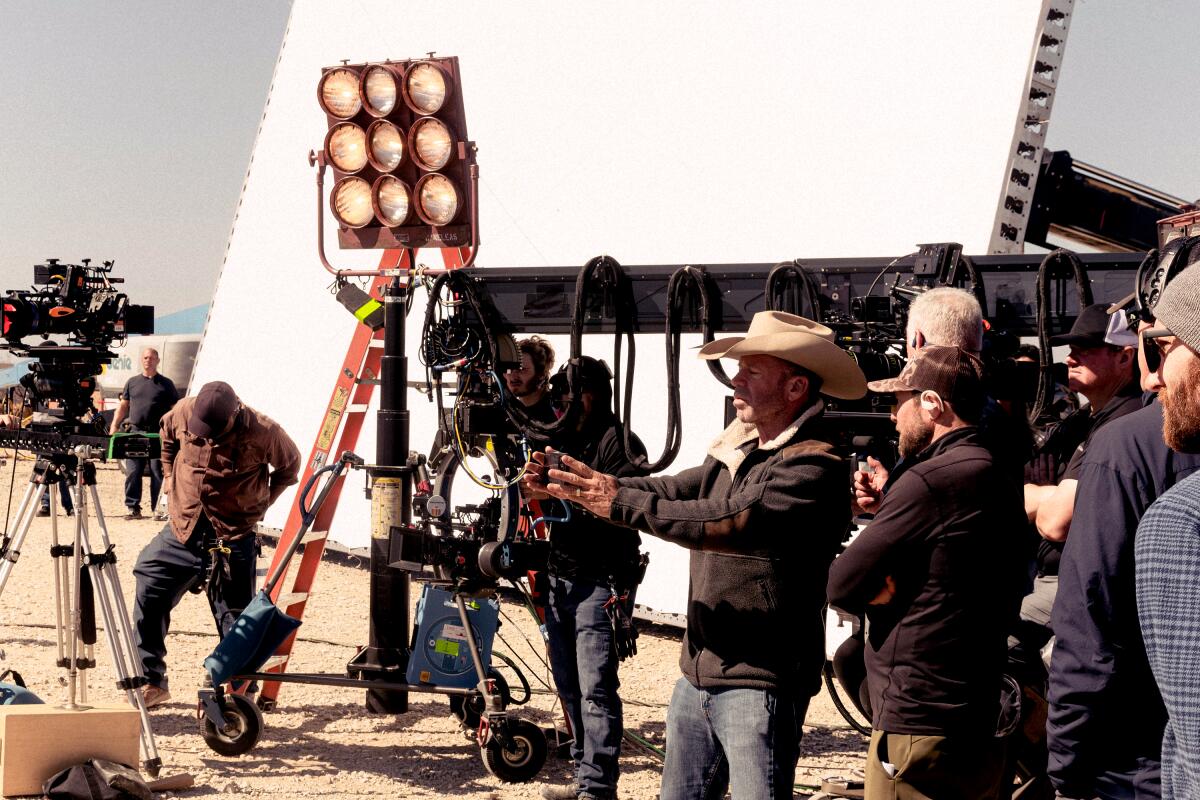
In Los Angeles, you’re dealing with premium space and premium people. The vendor ecosystem is unparalleled. You can get your scene dressed, lit, and shot with world-class precision in record time. And now that California’s credits are refundable, the biggest budgetary pain point — the inability to realize those credits quickly — is fading.
That means for productions over a certain scale, the higher upfront costs in LA can actually wash out when the final rebate checks arrive.
What’s Changing Fast: The 2025–2026 Factor
Two policy shifts will shape the next wave of production decisions:
First, California’s Tax Credit Program 4.0 — now live — brings real financial gravity back to LA. Refundable credits, higher base percentages, and a longer runway (through 2030) will make it harder to justify leaving if you’re already plugged into the studio system.
Second, Texas has dramatically upped its ante. Hundreds of millions in new funding for TMIIIP means more projects will get greenlit — and more cities will invest in film-friendly support. The only wildcards are the program’s content eligibility rules (certain genres or topics may not qualify) and its finite size — meaning early application is crucial.
Final Take: A Tale of Two Spreadsheets
Calling Texas “the new Hollywood” misses the nuance.
It’s not trying to replace Los Angeles. It’s offering producers another playbook. And right now, that playbook is competitive — especially for productions that don’t require the full weight of LA’s infrastructure.
If you’re working mid-scale, incentive-sensitive, and creatively flexible? Texas can save money and time. If you’re shooting a blockbuster or an ensemble prestige drama that needs 300 extras, a union sound team, and five prop houses on call — California’s advantages are still formidable.
The smartest producers aren’t choosing one state for everything. They’re running dual budgets, evaluating incentive value net of red tape, and picking based on what fits the project.
In the end, the future of production might not be red state vs. blue state — but spreadsheet vs. storyboard. And in that calculation, Texas is making its case louder than ever.
Further Reading & Resources:
